Showing posts with label life insurance. Show all posts

Tuesday, January 05, 2016

Another Tax Skirmish for Campbell's Soup Heirs

John T. Dorrance,  inventor of Campbell's condensed soup, died in 1930. As every student of estate planning learns, Dorrance had maintained a home in New Jersey and another in a classier Pennsylvania neighborhood. At his death, both New Jersey and Pennsylvania claimed him as a resident and levied tax. The U.S. Supreme Court declined to intervene.

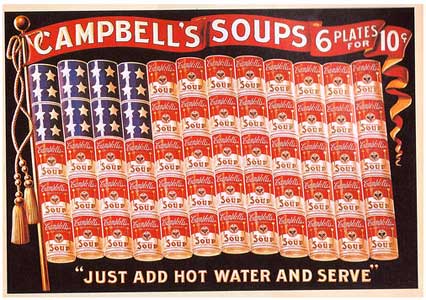
Vintage Campbell's Soup ad
In 1995 a grandson, John "Ippy" Dorrance, made news by renouncing his citizenship for tax reasons and moving to Ireland before selling a large chunk of Campbell's stock.

Another grandson sought to  tame the estate-tax dragon with life insurance. In 1966 Bennett and Jacquelyn Dorrance bought policies from five companies with a face value of almost $88 million.

At that time the insurance companies were "mutuals." Policyholders had membership rights. When the insurers became stock companies, the Dorrances and other policyholders received shares.

When the Dorrances later sold their shares, how should they have calculated their capital gain? Were the entire sales proceeds  capital gain?  Or did they have a "cost basis," even though they had merely paid premiums, not purchased stock?

Reversing a District Court decision, the Ninth Circuit U.S. Court of Appeals says the Dorrances' cost basis is zero.

Video clip of Appeals Court panel here.

Monday, October 20, 2014

“The Father of Estate Planning"

Give a birthday shout-out to Charles Ives, the American composer born 140 years ago, October 20, 1874. Life insurance was Ives' day job, and when the federal estate tax came along, he realized there was a better way to sell insurance than to ask, "How much do you love your wife?"

The photo below shows Ives in 1913, the year the federal income tax was introduced. The federal estate tax followed in 1916, and two years later his most noted nonmusical work appeared: "Life Insurance with Relation to Inheritance Tax."


Wednesday, February 29, 2012

The Decline of Life Insurance


Percentage of U.S. adults 
who owned individual life insurance in 1960:
59%

Percentage who owned individual life insurance in 2010:
36%

Those figures come from Prudential's The Life Insurance Coverage Gap. Today's two-income couples may carry insurance if they have dependents. Otherwise, apparently … not so much.

In addition, Prudential acknowledges, the mind-boggling complexity of many life insurance products scares people. Agents may stand a better chance of gaining traction if they lower their sights and sell simple term policies. 

Surely that's not what an insurance company would have suggested back in 1960!

Friday, June 11, 2010

Life settlements under attack

The Wall Street Journal reports on an interesting case in which a lawyer arranged for $56 million worth of insurance on his own life to be sold to investors for a few hundred thousand dollars.  The investors paid the premiums after the sale. 

Apparently the lawyer's wife was not privy to the deal, because she now insists that the insurance proceeds be paid to the estate, not the investors.  They didn't have an insurable interest, she argues.

However, one litigant has produced some paperwork suggesting that the wife signed off on the transfer of the policy ownership after it was in force for two years. 

Per the Journal, the life settlement industry had been hot about five years ago, but cooled with financial crash in 2008.

Sunday, January 24, 2010

Reverse Mortgages and Irrevocable Life Insurance Trusts

Can someone be needy enough to take out a reverse mortgage but rich enough to take a heavy hit from the federal estate tax at death?

Apparently so. But the sales strategy of using proceeds from a reverse mortgage to fund an irrevocable life insurance trust may be on the way out, says Jim Veale in this column:
Today ILITs are not as popular as an estate planning vehicle as they were in the first half of the last decade. The situation could change depending on the action Congress takes this calendar year. Until proprietary reverse mortgages return and provide substantial proceeds, using reverse mortgages as a means of funding ILITs will be little more than an interesting curiosity of the last decade.

Tuesday, May 26, 2009

Trouble For Self-Paying Insurance Policies?

"Using life insurance to cover the death tax is common practice," reports Arden Dale in the WSJ, "but the strategy is blowing up some estate plans now."
Problems stem largely from expectations about how well investments in a policy will perform. A policy may have been set up to self-pay premiums, based on the notion that investments will beat the interest rate used. Money then builds up and pays the premiums automatically.

But if interest rates decline over time, trouble can occur. The owner may not be aware that the policy is taking out internal loans to keep up with the premium payments.
I haven't the foggiest idea of how this "perpetual motion" approach to life insurance works. Few people do, according to Dale. The possibly endangered policies "are complicated enough that an estate planner or attorney may not feel comfortable vetting them."