Saturday, January 25, 2014

Homes of the Infamous Formerly Rich

In my Connecticut days, Round Hill Road in Greenwich was an admirable address. Today, according to one Greenwich realtor, not so much.
One of the gaudy estates is owned by a hedge fund kingpin now residing in prison; others belong to a real estate investor just coming out of prison and an investment adviser who steered his clients and their billions to Bernard L. Madoff. Then, to cap it off, a guy in an 8,000-square-foot mansion is charged with crushing his wife’s skull in with a baseball bat.

This is “Rogues Hill Road,” or so Mr. Fountain has called this 3.5-mile stretch of asphalt. “All these aspirational schnooks came out here thinking that they had really made it,” said Mr. Fountain, a real estate broker, blogger and lifelong Greenwich resident. “But then the tide went out and what you are left with is a bunch of crooks.”
More than 40 Greenwich homes are on the market for at least $10 million. Make an unreasonable offer.

Friday, January 24, 2014

A Mysterious Chase Nest Egg Ad

Watching Rafa trounce Federer at the Australian Open reminded me of this 1963 Chase Manhattan ad, one that I've been puzzling over since last summer.

"Saturday afternoon with the young fry" is the photo caption. A young boy stands on what appears to be a private tennis court.  He is poised to volley at net. But we see no net, no other players, no tennis instructor. Just the boy, alone on a tennis court without a net.

No wonder Dad isn't paying attention. His chair is turned slightly away, next to a small table on which sits a pitcher. Is he sharing the contents (fruity and perhaps rum based?) with someone to the right of the picture frame? Who? The boy's mother? The tennis instructor? A girl friend? We have no clue.

What do you think is going on?


Tuesday, January 21, 2014

Coming Clean on Bypass Trusts

Over the years your humble blogger wrote enough newsletter articles on bypass trusts to fill a dumpster. Don't waste your federal estate tax exemption! Prevent unnecessary estate tax at the later death of your spouse!

Rarely did clients encourage us to mention the income-tax downside: Although assets left outright receive a stepped-up basis at death. assets left in trust do not. If Grandpa dies when his Apple shares, purchased at $10 each, are worth $550, Grandma can sell at that price or less without realizing taxable gain. Only additional growth would be taxable. If the shares pass in trust, everything over $10 a share will be taxable gain.

When the Bush tax cuts lowered the top tax rate on capital gain to 15%, the income tax drawback of bypass trusts seemed less important. But this year the top federal income tax rate on capital gain is back up, approaching 25%. (And, of course, the effective tax rate on gain often exceeds the listed rate.)

Fortunately, new estate tax rules allow Grandma to make use of Grandpa's unused estate-tax exemption. Bypass trusts have become unnecessary. Or have they?

According to Deborah Jacob's dispatch from "the Super Bowl of estate planning," drafters of wills and trusts have faced up to the potential income-tax cost of bypass trusts. Nevertheless, for a variety of reasons they think the trusts still have a future.
•
Caution: Don't take the title of Jacob's column, "Estate Planning for the 99%," literally. Candidates for bypass trusts are the 1% (the 1% threshold is around six to eight million, depending on who you ask) or at worst the top 2%. Remember, only 5% of U.S. households have a net worth of at least $1 million.

Federal estate tax is no longer an issue in most estate planning. But estate beneficiaries still need protection from creditors and divorce lawyers. Trusts will continue to be useful.

Wednesday, January 15, 2014

Should Capital Gain Be Taxed As Income?


On the question of taxing capital gain as income, the U.S. Supreme Court has spoken, writes Bruce Bartlett. Whether you think profit realized from the sale of investments should be taxed never, sometimes or always, at one time or another the Court has delivered a decision supporting your view.

If capital gain were truly income, in theory both realized and unrealized gain should be taxed annually. For obvious reasons that theory has never been put into practice.

Read Bartlett's informative column and see if you agree with those who "believe that only by adopting a pure consumption tax, and eliminating the taxation of incomes entirely, can we fully escape the problems inherent in capital gains taxation."

Monday, January 13, 2014

Private Banking Reinvented

In the wake of the Great Recession, obtaining loans from one's banker has become more and more difficult and time-consuming. The wealthy set is turning to a quicker, easier alternative, Paul Sullivan reports: high-end pawnbrokers.

Hock shops for asset-rich but liquidity-restrained borrowers are springing up both online and in bricks and mortar. Suttons & Robertsons, an English firm founded in 1770 and catering to the "blue chip, wealthy crowd," opens a New York store this month.

Objects pawned aren't limited to Rolexes, jewelry and the family silver. One borrower parted with
one of his two Bentley GTs. (Your humble blogger probably will never realize his dream of a Bentley convertible. But if he does, he promises not to pawn it. Never!)

Marketers of investment services learn to follow the money. High-end pawn shops could offer promising opportunities. If a need for funds arises from divorce, for instance, one man's liquidity problem should lead to one woman's liquidity event.

Wednesday, January 08, 2014

You Can't Make This Stuff Up

From ‘Nigerian’ Inheritance Scam Leads to Lawyer’s Suspension:
Early last month an attorney whose name I’ll spare you was suspended from practice for 12 months by his state’s lawyer disciplinary panel. Someone the lawyer had represented in a criminal case presented documentation indicating that he (the client) was the beneficiary of a large bequest. From a long-lost cousin. In Nigeria. 
You read that correctly. Believing, or hoping, that the paperwork was legit, the lawyer agreed to help his client secure the inheritance. For a 10 percent contingency fee – $1.8 million. Over the course of the next several days, the lawyer communicated with people he believed worked for the “Central Bank of Nigeria,” the “African Union” and the President of Nigeria.

Quick Tax Quiz

Q. What do Americans do for 1,718,345.hours a year?

A. Fill out federal gift tax returns.

“Watson, Find Me Some Alpha!”

Watson, IBM's eager-to-learn computer, was a winner playing "Jeopardy." Making big money in the business world is proving more difficult, reports the WSJ. Watson's possible career paths include health care and wealth management:
IBM is developing versions of Watson that can match cancer patients to clinical drug trials or recommend an investment strategy after reviewing a customer's portfolio.*** 
Citigroup Inc. has been collaborating with IBM since March 2012 to develop a version of Watson that can recommend financial products to consumers. It hasn't been launched yet.
IBM hopes Watson can earn $1 billion a year. That's a lot of Alpha.

Monday, January 06, 2014

Do Investors Want To Be Conned?

JPMorgan Chase must have noticed that Bernie Madoff's magical brokerage accounts exuded the aroma of dead fish. Based on that conclusion, the Feds are expected to impose a penalty of $2 billion. The bank's total financial punishment for recent transgressions, including the London Whale disaster,  amount to $20 billion. {A billion here, a billion there . . . .)

Before you knock JPMorgan and its formerly esteemed CEO, read James Surowiecki's New Yorker column:
[T]he fundamental difference between entrepreneurs and con artists is that con artists ultimately know that the fantasies they’re selling are lies. Steve Jobs, often enough, could make those fantasies come true. Still, that unquantifiable mélange of risk, hope, and hype provides both the capitalist’s formula for transforming the world and the con artist’s stratagem for turning your money into his money. Maybe there’s a reason we talk about the American Dream.
From JPMorgan's perspective, blowing the whistle on Madoff may have seemed like dissing Santa Claus.

Update: If JPMorgan Chase gets penalized for letting Madoff do his thing, what about the SEC? The agency was warned about Madoff but – as the WSJ points out – "allowed him to continue stealing from victims until the fraud collapsed in 2008."

Related post: Was Madoff a "Well-Known" Fraud?

Saturday, January 04, 2014

How UK Banks Garner Executorships

Banks in Britain can offer will-writing services. Good way to pick up executorships? You bet.

Maybe too good.

George Goodman, 1930-2014. R.I.P.

Investors and TV viewers knew Goodman as Adam Smith. He was a founder of Institutional Investor, and Bernstein and Sondheim played at his wedding.

“As my Texas friends say, ‘Money ain’t everything, but everything won’t go out with you unless you’ve got it.’ ”
– George Goodman

Related posts: 

Thursday, January 02, 2014

Acronyms of Offshore Banking

FATCA = Foreign Account Tax Compliance Act, which takes effect this year.

FBAR = ROFBAFA = Report of Foreign Bank and Financial Accounts.

Sunday, December 29, 2013

The Street of Trust Companies

Once upon a time, the trust companies you passed on the street were monumental edifices, faced with granite and marble. By contrast, the trust companies on this street are little more than mail drops.


South Phillips Avenue, Sioux Falls, South Dakota
What do you suppose they'll be saying about the recent rash of Forever Trusts a century from now?

Thursday, December 26, 2013

Trusteed IRAs

When IRAs were introduced in 1974, they sounded complicated. An IRA had to be more than just an account. An IRA had to have a bank as custodian or trustee.

Ferrari 458
Long ago that technicality vanished from public view, but now it turns out to be useful. Enter the trusteed IRA. The trustee sees to it that the beneficiary (nobody needs a Ferrari, dude!) takes no more than the required minimum distribution.

Julie Jason discusses trusteed IRAs here and offers an example.

Monday, December 23, 2013

Two Ads Celebrating the Season

During the middle third of the Twentieth Century, at this time of year Coca Cola virtually appropriated Santa Claus. This ad, from 1963, features the next-to-last portrayal of Santa by Haddon Sundblom, the illustrator who brought the jolly old elf of The Night Before Christmas to life.

Christmas holiday ads by banks and trust companies half a century ago were rare. This Chase nest-egg ad was an unusual if partial exception. The ad copy is standard. The photo illustration isn't. It's the only example we've seen of a nest-egg ad where the egg plays second fiddle to the scenery. It's as if Chase were saying, "We want your business but gosh, isn't this an evocative holiday scene?'

Sunday, December 22, 2013

Sunday, December 15, 2013

Asset Protection Trusts, Way Off Shore

The Sunday New York Times takes a lengthy look at asset protection trusts based in the Cook Islands. The Cooks launched their asset-protection initiative, with guidance from an American expert, in 1989.

Asset protection trusts aren't illegal and don't seek to dodge taxes. For doctors facing frivolous lawsuits, such trusts bring welcome peace of mind.

Other users of asset protection trusts may not be so upstanding. As the Times notes, assorted creeps and crooks, including Ponzi prince Allen Stanford, have utilized Cooks trusts.

Lady Joy
Judging from recently leaked data, trust assets are seldom held in the Cook Islands. More likely they consist of European financial accounts and other assets sprinkled around the world. The trust of Denise Rich, former wife of Marc Rich, included her yacht, the Lady Joy.

Friday, December 13, 2013

Two Online Investment Programs

Felix Salmon takes a look at Betterment and Wealthfront: How Online Investment Advisers Add Value.

How important are referrals – from accountants, lawyers or friends – in generating customers for these programs?

Will investors be hearing more about "tax alpha"?

Wednesday, December 11, 2013

1963: The South Rises

Five decades ago, northerners left their wealth to be looked after in New York, Boston or Chicago when they headed to Florida. With this ad, from December, 1963, First National of Palm Beach sought to get in on the action. 

The ad had a name illustrator: Paul Calle. He was best known as a designer of postage stamps, notably this one:


Monday, December 09, 2013

A Classic Investment Ad From 1935

Don't try to make investing your second career, turn your portfolio over to the pros. That's the message Fiduciary Trust delivered in this 1935 ad.

That's the message we were still recycling for Merrill Anderson clients many decades later. Not until digital data-crunching revealed that the average investment pro produced only average results did we have to fall back on "asset allocation."

By 1935 it must have seemed safe to advertise again. After  the market disaster of 1929-32, the DJIA recovered nicely in 1933, remained fairly stable in '34, and soared almost 40% in 1935. Alas, a new, er, "recession" sent the Dow plunging almost 33% in 1937.

 Do you suppose Fiduciary was still running ads in 1938?

Wednesday, December 04, 2013

Inflation Watch (Theater Edition)

Broadway had its best Thanksgiving week ever at the box office, reports The New York Times. 

Top ticket prices at selected musicals:

The Lion King: $197.50 

Wicked: $300

The Book of Mormon: $477

A little over half a century ago, a ticket to the theater in London cost $3.50. According to this 1961 British Travel ad, a mere $100 could buy you a whole week in the U.K.


Guess that's why they call them The Good Old Days.

Selling Life Insurance to the Extremely Rich

One of the  pleasures of retirement is not having to read Tax Court Memo Decisions any more. Yet who could resist this one, with a cast of characters ranging from Fitzgerald and Hemingway to the Koch brothers?

Michael D. Brown and Mary M. Brown v. Commissioner deals with the tax treatment of a private plane. But the context is high-end estate planning, where $300-million insurance policies are deployed to save humongous amounts of tax.

Enjoy!

Tuesday, December 03, 2013

When Income Was Income And Principal Was Sacrosanct


Mary Ann Glendon, as quoted in Felix Salmon's column on philanthropy:
Bostonians still tell the story of the respectable society matron who was crossing the Common one day and ran into an old college chum she hadn't seen for years. The matron was dismayed to see that her friend was obviously engaged in the world's oldest profession. "My dear," she said, "whatever has happened to you?" "Well," said her friend, "it was either this or dip into capital."
Related post: The Secret of Perpetual Wealth

Monday, December 02, 2013

A World-Class Tax System for the U.S.?

Cyber Monday! You just bought a huge, name brand LED TV for $999!

Would you have paid $1,130? Would you have been happier to pay $1,130 if you got a sizable income tax cut?

Al Hunt –fondly remembered from his Wall Street Journal days – asks you to imagine the highly improbable: "120 million American families no longer have to file income tax returns; the top individual rate is lowered by 20 percent; the top corporate rate is cut by more than half; the government gets the same amount of revenue; and the tax system is slightly more progressive."

How does the government get the same revenue? A 12.9% Value-Added Tax – sort of a national sales tax.

The Competitive Tax Plan is the brainchild of  Michael J. Graetz, Professor Emeritus at Columbia, now lecturing at Yale Law School. Last week Graetz received an award from the National Tax Association.

Everybody knows the federal income tax is a bureaucratic nightmare. As Graetz has observed, the present system is crazy:
In a recent report, National Taxpayer Advocate Nina Olson estimated that individuals and businesses spend 6.1 billion hours per year on tax compliance—the equivalent of full-time work for more than three million people. I am surprised the number is that small. The Form 1040 instruction booklet spans more than a hundred pages, and the form itself has more than ten schedules and twenty worksheets.
The great sticking point for the Competitive Tax Plan is the proposed VAT. The VAT is also the plan's best selling point. Uncle Sam loses untold billions every year – the taxes dodged by everyone from millionaire drug lords to maids and gardeners paid under the table. Evaders of income and payroll taxes would not be able to dodge the VAT.

Graetz has been promoting and fine-tuning his tax plan for over a decade. Al Hunt reports the tax reformer is prepared to stay the course: 

"Graetz, when comparing his idea to the status quo or other options, relishes a political debate over the next several years: 'These things take a long time.'"

Truer words were never spoken.

Tuesday, November 26, 2013

Freeport Tax Havens?

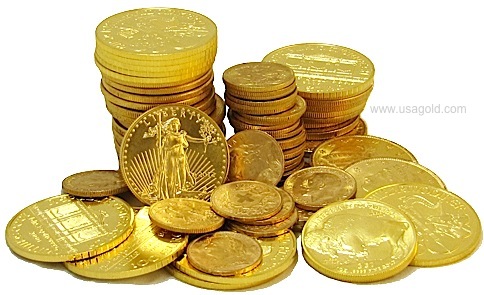
Imagine places where investors with overstocks of fine art, gold coins, historic tapestries or vintage automobiles could sell or swap their hard assets without worrying about taxes.
USAGOLD Coins
Such havens may exist in Luxembourg, Geneva, Singapore and other free ports, The Economist reveals: : Uber-Warehouses for the Ultra-Rich. 

Friday, November 22, 2013

The Law's Delays

2013. Contested Inheritance Goes on Sabbatical. 

Less than a year before her death at 93 in 2012, Geraldine Webber largely disinherited the beneficiaries of her earlier will in favor of a young policeman. The resulting will contest (a trust contest, really) is unusual in that the aggrieved beneficiaries are charities, not relatives. For an earlier newspaper report and a link to a video of Webber executing her will, see Will Contest Goes to the Video.

When will the case go to trial? Not soon. The judge has approved a one-year sabbatical, perhaps to give the contending parties more time to reach a settlement.

1913. The Game

Big-time college football contests drawing vast crowds are now commonplace. A century ago, nothing compared to The Game. When Yale played Harvard, even justice was delayed.

The New York Sun, November 21, 1913

Thursday, November 21, 2013

Seeking a Fiduciary? Good Luck!

Jill and Joe Investor should look for investment guidance from someone acting as a fiduciary, not a commissioned salesperson. Sound advice? In reality it's becoming harder and harder to act upon.

When advisers work on commission they may pledge to "demonstrate our commitment to putting customers first." But as Reuters notes, it's a commitment with an asterisk. And increasingly, brokers aren't working for commissions alone. Instead they have become "fee-based" advisers. That's not the same as "fee only." But not necessarily so different, either. The WSJ ($) cites an Aite Group study of almost 400 registered representatives (who traditionally work on commission) and registered investment advisers (who traditionally work for fees). The results show that Jill and Joe Investor face a daunting challenge:

Brokers working on commission reported getting, on average, about 20% of their revenue from advisory and consulting fees.

"Fee-based" advisers got almost 60% of their revenue from commissions.

And advisers most closely resembling "fee-only" got over 15% of their revenue from commissions.

In real life, Jill and Joe don't pay much attention to the distinction between fiduciaries and investment salespeople. Can we blame them?

Wednesday, November 20, 2013

Could Ryan O’Neal Take Back His Farah Fawcett Portrait?

Warhol: Farah Fawcett
Andy Warhol silkscreened two copies of his photo-portrait of Farah Fawcett, one for her, the other, apparently, for Ryan O'Neal. After the couple broke up, O'Neal seems to have given his copy to Farah. After she died, he took it back. Does the Warhol belong to him, or did it pass from Fawcett's trust to a museum? The lawssuit we mentioned two years ago is finally going to trial.

Skakel Family Trusts

Trusts have figured prominently in the estate planning of the Skakel family. See the NY Times: Family's Tenacity and Wealth Put Skakel at Cusp of Freedom.

Michael Skakel's 2002 conviction for the 1975 murder of Martha Moxley recently was overturned.

Friday, November 15, 2013

Subconscious Influences on Financial Decisions

Do investors prefer stocks with pronounceable ticker symbols? 

How can people sense a dollar bill is fake even when they don't notice the bill is fake? 

I'm not sure TWTR, the symbol for Twitter shares, is perceived as unpronounceable. Nevertheless, Adam Alter's The Secret Science of Stock Symbols is a fascinating read.

Wednesday, November 13, 2013

Was Nobody Wealthy Before 1980?

Thanks to John Mauldin for sharing Dylan Grice's The Language of Inflation. Brice enlivens his critique of the Great Credit Inflation with examples of changing word usage as charted by Google's Ngram Viewer.

The term "wealth management," for instance, surged in the 1990s. Before that, memories of the Great Depression made people wary of flaunting their wealth. Besides, it wasn't good form.

Today, "wealth management" often has little to do with real wealth or real management. Grice illustrates with a story:
[W]e attended a lunch recently in which one … “wealth manager” was promoting his services to those around the table. An Italian gentleman claimed to be relieved to have finally found someone who could help him. “At last!” He gasped after the banker’s pitch, “I could really use some help managing my family’s wealth. We own vineyards and a processing plant in Italy, some land and a broiler farm in Spain, some real estate scattered around Europe and the Americas... We are fortunate indeed to have such wealth, but managing it all is increasingly challenging. Can you help?” 
The poor banker looked forlorn. Of course, he didn’t mean that kind of wealth, the old-fashioned, productive kind of stuff. He meant the modern, papery, electronic kind. The stuff that blinks at you all day from a screen.
Grice offers food for thought, although I can't get my head around his reference to"no inflation over the last thirty years." Do I pay more than twice as much today because everything is more than twice as good?

One Bottle Equals More Than 200 Million Cans of Coke

At Christie's Francis Bacon's triptych sold for a record $242 million. Other prices were pretty impressive, too. This Warhol, for instance, went for a $57.3 million.


The other day I bought 36 cans of Coke (three fridge packs) for $10. At that rate, the Warhol is valued at 206,280,000 cans of Coca-Cola.

Sunday, November 10, 2013

Should Gore Vidal Have Left a Nicer Will?

If a famous author wants to leave the bulk of his wealth ($37 million, by one estimate) to Harvard, fine.
Vidal in 2009,
two years before altering his will.
But wouldn't it be nice to leave something to his half-sister and her son? And surely he'd want to pension off his longtime housekeeper-chef?

Not Gore Vidal.  “I’m exactly as I appear," he once said. "There is no warm, lovable person inside. Beneath my cold exterior, once you break the ice, you find cold water.”

Result: yet another celebrity will contest. Nina Straight, Vidal’s half sister, "is challenging her half brother’s will on the grounds that Mr. Vidal was not mentally competent when he changed the terms of his will the year before he died."

Do you get the feeling that Vidal would have been sorry if his estate planning had not provoked a legal battle?

Photo via Wikimedia Commons

Thursday, November 07, 2013

Dynasty Trusts: Rename or Remarket?

Have you noticed? The trade name for very long-term family trusts seems to be changing from Dynasty Trusts to Legacy Trusts.

"Dynasty," it seems, reminds too many Boomers of the old prime-time TV soap opera, best remembered for Joan Collins' performance as Blake Carrington's evil ex wife. The Carringtons were hardly exemplars of family values.

The current TV hit, Duck Dynasty, doesn't help either. Too much hair.

Unfortunately, "Legacy Trusts" is an awkward substitute. The label could be attached to any trust extending beyond a trustor's lifetime. Besides, financial marketers have already borrowed "legacy" to stand for the handing down of family values: work hard…be kind…never draw to an inside straight.

Joan Collins
Nefertiti
Wouldn't it be better to reburnish the luster of Dynasty Trusts? 

How can we make the name evoke less Joan Collins, more Queen Nefertiti?