– Nathan Meyer Rothschild, 1834
Wednesday, August 27, 2008
Rothschild's Recipe for Wealth
“It takes a great deal of boldness and a great deal of caution to make a great fortune; and when you have got it, it requires ten times as much wit to keep it.”


Tuesday, August 26, 2008
Go North, Young Wealth Manager
 Investment advisers who sincerely want to be rich need new clients with new money. Where to find them? North Dakota!
Oil boom is changing the landscape and finances of North Dakota, writes Phillip Sherwell in the Telegraph. America's newest Black Gold Rush is gushing millionaires. What's more, "America's least-visited state is one of just three with a budget in the black - a surplus of $1 billion for its 635,000 residents."
Monday, August 25, 2008
$10 billion for irrevocable inter vivos trusts in 2005
The summer issue of the IRS Statistics of Income includes an analysis of the 2005 gift tax returns. You might think that no one would make taxable gifts when there's a chance that the federal estate tax could be repealed (the chance was much better in 2005), and you'd be almost right. Just over $40 billion in gifts were reported to the IRS, with 97% being not taxable for one reason or another. Still, gift tax collections came to $1.7 billion from 7,664 federal gift tax returns (more than 260,000 gift tax returns were filed overall).
One quarter of the transfers were in trust, or about $10 billion. Most of these, $2.8 billion worth, were simple trusts that pay all their income each year to one beneficiary. Marital trusts were lumped in with personal residence trusts and generation-skipping trusts, and so are not included in that figure. Charitable split-interest trusts came in just under $1 billion.
More women filed gift tax returns than men.
One quarter of the transfers were in trust, or about $10 billion. Most of these, $2.8 billion worth, were simple trusts that pay all their income each year to one beneficiary. Marital trusts were lumped in with personal residence trusts and generation-skipping trusts, and so are not included in that figure. Charitable split-interest trusts came in just under $1 billion.
More women filed gift tax returns than men.
Thursday, August 21, 2008
A concrete example of disinheritance rage
Following up on JLM's observation below, here's the New York Post's coverage of the ugly publicity that has emerged over the estate of Jerry Orbach.
Don't miss estate attorney Joel Schoenmeyer's take on it.
Don't miss estate attorney Joel Schoenmeyer's take on it.
Disinheritance Rage
Where there's a will, there's a war, reports Olivia Gordon in the Telegraph:
Lawyers from across Britain have told the Telegraph that they are handling ever-increasing numbers of will contentions. One northern firm, Brabners Chaffe Street, has reported a 200 per cent rise in the number of contested wills in the past three years alone.Similar trend in the U.S.? Seems likely. Even Trouble, Leona Helmsley's canine heir, couldn't hang on to most of her millions.
While some solicitors cite high property prices, which make an estate well worth fighting over, others put the trend down to our newly litigious society and the fractured nature of modern families.
Monday, August 18, 2008
“Subprime” Takes the Gold
Subprime was voted the word of the year by the American Dialect Society, writes Jack Rosenthal in the NY Times Sunday magazine.
Other new terms we reluctantly became better acquainted with in 2007 include:
Other new terms we reluctantly became better acquainted with in 2007 include:
Liars' loansFinancial jargon is amusing to insiders but utterly baffling to most Americans. When you communicate with clients or prospects, remember the findings of an AARP Financial survey:
Ninja loans (no income, no job or assets)
Jingle mail
And, of course, our personal favorite:
Exploding ARM
Less than one-third of those surveyed said they understood the terms "basis point," "expense ratio," or "index fund" well enough to explain them to a friend or co-worker.
Thursday, August 14, 2008
Prepare for poaching
Financial Planning.com is offering a 23 minute podcast called Trusts: The Next Big Thing. From the description:
Certainly you can recommend a reliable attorney to those clients needing such services. A trust company can do much of this work as well. But your clients will surely want the advisor who's led them through asset accumulation to help them through this important process. Are you prepared to be their guide?How will the trust industry respond to this encroachment? FP points out that two developments will fuel the boom in trust business: the number of affluent household is expanding, while technological advances permit semi-custom service delivery on a mass basis. They state that the average trust has fallen from $5 million to $1 million (I remember when that was the minimum at many places, not the average)
Wednesday, August 13, 2008
Paine Webber Redux?
Reeling from derivatives losses and tax-shelter scandals, UBS ponders breaking itself up. At Investment News, Evan Cooper wonders if that could mean the return of Paine Webber, the venerable wirehouse UBS absorbed not that many years ago. Cooper also offers another reminder that in the financial industry, big can be bad:
The UBS problems just prove the hubris inherent in the idea of a worldwide, universal financial institution that can lend, underwrite and advise, all under one roof. Sure, you can get such creations to work, but why? The gigantic, ponderous beasts aren’t necessarily all that profitable and can create problems of international proportions.
In finance, as in so many businesses, smaller is often better. In the case of UBS, it’s why selling or spinning off the U.S. retail business (that is, PaineWebber) could work.
Tuesday, August 12, 2008
Maybe Nest Eggs Really Are "Worthless"
Last month we told you what the founder of The Merrill Anderson Company, an old Yankee, thought about nest eggs: "Chicken farmers can't afford to leave real eggs in the nests. They use fake eggs. Nest eggs are worthless!"
Maybe he had a point. In his 1967 Wall Street classic, The Money Game, George Goodman writing as Adam Smith tells this story:
 The first IBM PC, 1981. Photo via Wikipedia.
Maybe he had a point. In his 1967 Wall Street classic, The Money Game, George Goodman writing as Adam Smith tells this story:
Mr. Smith said to [his wife and children], "Our family owns IBM, which is the greatest growth company in the world. I invested twenty thousand dollars in IBM and that twenty thousand has made me a millionaire. If something happens to me, whatever you do, don't sell the IBM." Mr. Smith himself never sold a share of IBM. Its dividends were meager, naturally, and so Mr. Smith had to work hard at his own business to provide for his growing family. But he did create a marvelous estate. ***IBM truly was an investment colossus in those days. Imagine Google, Apple and Amazon rolled into one. Only the crash of 1987 dispelled the stock's aura of invincibility. (Hope the Smiths didn't sell; by the late 1990s their IBM wealth would have multiplied again.)
Mr. Smith died; the IBM was divided among his children. The estate sold only enough IBM to pay the estate taxes. Otherwise the children—now grown, with children of their own— followed their father's dictum, and never sold a share of IBM. The IBM grew again, made up for what had been amputated to pay estate taxes, and each of the children grew as rich as Mr. Smith had been…. They had to work quite hard at their own businesses, because their families were growing and their only money was in IBM. Only one of them even borrowed on his IBM, to get the down payment for a heavily mortgaged house. And the faithful children were rewarded by seeing IBM multiply and grow. ***
The Smiths are now in their third generation of IBM ownership, and this generation is telling the next, "Whatever you do, don't sell the IBM." And when someone dies, only enough IBM is sold to pay the estate taxes.
In short, for three generations the Smiths have worked as hard as their friends who had no money at all, and they have lived just as if they had no money at all, even though the various branches of the Smith family all put together are very wealthy indeed. And the IBM is there, nursed and watered and fed, the Genii of the House, growing away in the early hours of the morning when everyone is asleep.
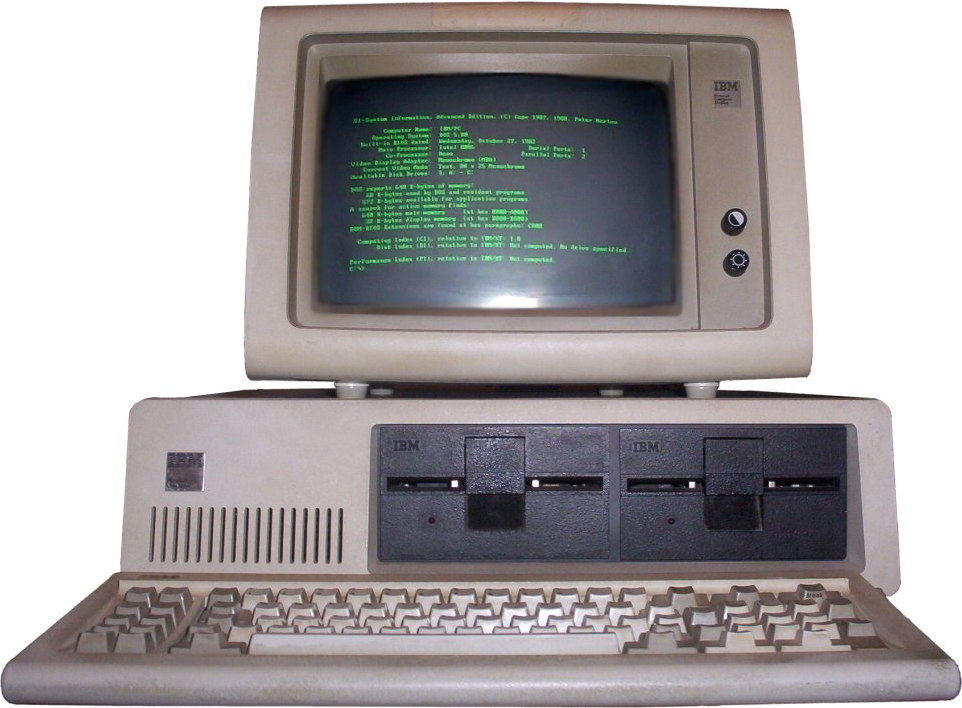 The first IBM PC, 1981. Photo via Wikipedia.
Monday, August 11, 2008
Many Fail to See Humor in ‘I Am Rich’
When Jim Gust rants about art, you know something's up. Something about Apple, perhaps?
Ah yes! Th e New York Times reports a to-do over one of the iPhone applications that Apple encourages developers to write. Apple distributes the apps, typically costing next to nothing, at its iTunes app store.
But this particular app, created by Armin Heinrich of Germany, cost $1,000. When downloaded to an iPhone, it displayed the image of a multi-faceted ruby and broadcast the message, "I am rich." That's all.
Ah yes! Th
 e New York Times reports a to-do over one of the iPhone applications that Apple encourages developers to write. Apple distributes the apps, typically costing next to nothing, at its iTunes app store.
But this particular app, created by Armin Heinrich of Germany, cost $1,000. When downloaded to an iPhone, it displayed the image of a multi-faceted ruby and broadcast the message, "I am rich." That's all.
“I found that some users complain about prices for iPhone applications above 99 cents,” Mr. Heinrich said. “I regard it as art."Apple, it seems, was not amused.
Financial Health Club for the Emerging Affluent
 Citigroup has launched myFi, hoping to create a "financial wellness" service for the emerging affluent. Initially, Smith Barney clients with less than $250,000 will be encouraged to move their accounts to the new myFi call center, where they will be served by salaried advisers rather than commissioned salespeople.
Ultimately, Ron Lieber writes in the NY Times, Citigroup's wealth management unit envisions MyFi as something of a financial health club:
The idea is to use the Web, along with call center teams that will be led by certified financial planners, to help people make sense of and then improve their entire financial lives, not just their investments. The catch? You may have to be willing to pay a monthly subscription fee.At NetBanker, Jim Bruene notes that a long-time Wall Street Journal columnist will play a role in the new venture:
MyFi uses a “wellness” theme in its pitch. Plenty of people pay $50 or $100 a month for gym memberships or personal trainers. Shouldn’t it be worth that much to keep your finances in shape, too?
myFi's director of financial advice is Jonathon Clements, a long-time Wall Street Journal personal finance writer who recently left the paper. If he can instill his pragmatic personal finance outlook to Citi's offering, it would help differentiate it from similar offerings.Ron Lieber writes that myFi is "is still working out the extent to which it can act as a fiduciary, the standard for someone who always acts solely in the client’s best interest.
"MyFi intends to be a fiduciary as far as client investments are concerned. What isn’t yet clear, however, is how far it has to go to be a fiduciary when, for example, advising someone who needs a new mortgage."
• • •
"Darling, guess what. I'm a little bit…fiduciary!"
Saturday, August 09, 2008
What is art, anyway?
 Merrill Anderson's quarterly Wealth Management newsletter includes a feature on page 4 called Collector's Corner, in which we report on auction results. We cover collectibles, cars, coins, just about anything, including art. I often have trouble understanding the prices.
My wife and I just watched the DVD of the 2007 documentary, My Kid Could Paint That. Two thumbs up, way up, as Siskel and Ebert might say.
The abstract paintings of Marla Olmstead came to the attention of the world when she was just 4 years old. As the documented in the film, she (or her parents) took the art world by storm. Soon her paintings were selling for tens of thousands of dollars. Buyers gushed about the complexity of the work that was, nonetheless, suffused with Marla's inherent innocence.
Were the paintings really that good? Not to my eye—the film is well named. My kid really could paint that, and so could I. But as such, how different is it from the rest of what passes for art today? Really, I'd much prefer a Marla Olmstead in my house to a Jackson Pollack. But I'm a philistine. The film does an excellent job of articulating my skepticism, which is evidently shared by much of the public.
In a stunning proof of the shallowness of "value" or "truth" in modern art, a huge controversy developed over whether Marla was really doing the paintings herself! 60 Minutes did an "expose" that strongly suggested, based upon "hidden camera" footage, that Marla's "best" works had been "polished" by someone else, presumably her father. Paintings that were incredibly valuable if there were really done by a 4-year-old suddenly were worthless if an adult had participated in any way! What an irony—people were paying for the process, not the painting at all! Because, after all, the painting isn't about what is on the canvas?
The Olmsteads proceeded to try to prove that Marla really did do her own work, by videotaping the creation of new paintings from start to finish. You can see examples at their website. The documentary leaves open the question of the "authenticity" of Marla's work, which is to me beside the point. Marla's paintings are still for sale, if not at the stratospheric prices that they once commanded. Wikipedia reports that the painting Marla created for the 60 Minutes hidden camera, the one that child psychologists said proved she was not a prodigy after all, recently sold for $9,000.
But the key point that the film makes without ambiguity is that, at base, modern art is just a fad. Beanie babies for rich people.
Years ago I attended a reception at Sotheby's in New York City during a trust marketing conference. Several of us had trouble reconciling the suggested prices attached to the paintings--the gorgeous old masters seemed way too cheap (at hundreds of thousands of dollars) compared to the millions commanded by some stark, unlovely, downright ugly modern pieces. We corraled a docent and asked him to explain what made a particular piece so valuable.
"Gentlemen," he explained patiently, "there are only two factors that affect the value of a painting. Supply and demand."
Wednesday, August 06, 2008
Protecting the Elderly and their Assets
Alexandra Lebenthal (you know, Alexandra and James) plugs trust companies in this post on the New York Social Diary:
Many banks and investment firms have trust companies which can act as Trustees. If there is a request for the Trust to make a distribution the Trustees must approve it and ensure that it is following the terms of the trust and the beneficiaries. Having had personal experience with this type of structure I can attest to their diligence. It is also possible to have co-trustees who are family members or friends and can act in concert with the co-trustees.
London: More Than 300 Family Offices
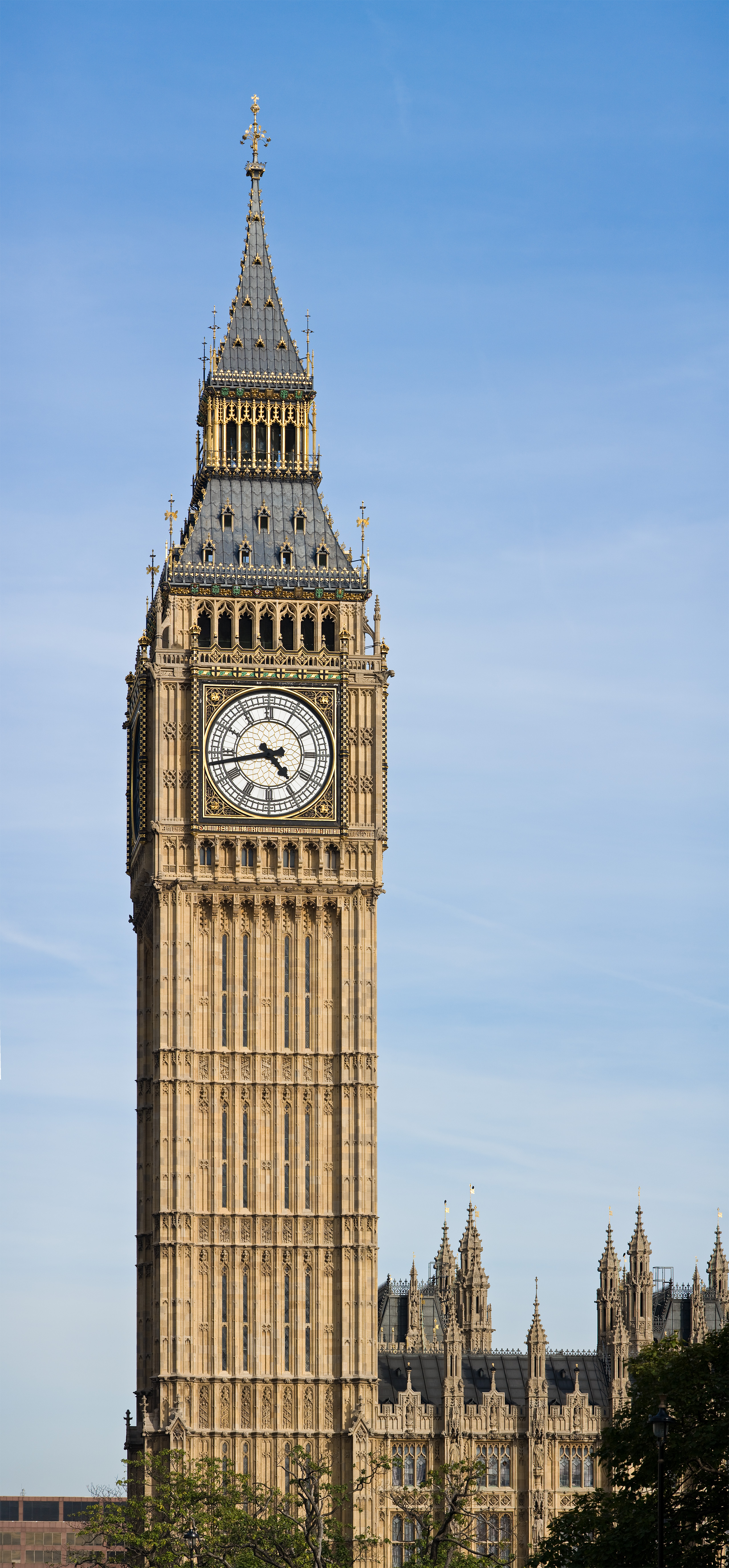 London lures family offices of super-rich, reports the Financial Times (free registration required).
For more on family offices from FT.com, see
‘Families set up as institutions’
US idea that finally crossed the Atlantic
Photo via Wikipedia
Are Your Bank's Trust Clients Worried?
Interviewed in Barron's, NYU economist Nouriel Roubini sees bad times ahead:
Back in the Mad Men era, when trust clients and beneficiaries remembered hearing of the horrors of the Great Depression and the Bank Holiday from their parents, trust departments had to spread the word that trust securities and other property were held separately from the bank's assets and would not be affected by the bank's failure.
Time to get out the word again?
We are in the second inning of a severe, protracted recession, which started in the first quarter of this year and is going to last at least 18 months, through the middle of next year. A systemic banking crisis will go on for awhile, with hundreds of banks going belly up.Roubini foresaw the housing bubble ending badly and the collapse of subprime mortgages, so we have to take his grim vision seriously. (You can also find the interview on his blog.)
Back in the Mad Men era, when trust clients and beneficiaries remembered hearing of the horrors of the Great Depression and the Bank Holiday from their parents, trust departments had to spread the word that trust securities and other property were held separately from the bank's assets and would not be affected by the bank's failure.
Time to get out the word again?
Monday, August 04, 2008
“A Work of Art, Too Precious to be Meddled With”
Remember Samuel Butler's Erewhonians? Smart cookies.
Entrepreneurs who became insanely rich were, the Erewhonians realized, the true philanthropists:
Another study suggests that the top 25% of households, income-wise, may generate as much as 70% of all personal spending.
Entrepreneurs who became insanely rich were, the Erewhonians realized, the true philanthropists:
He who makes a colossal fortune in the hosiery trade, and by his energy has succeeded in reducing the price of woollen goods by the thousandth part of a penny in the pound—this man is worth ten professional philanthropists. So strongly are the Erewhonians impressed with this, that if a man has made a fortune of over £20,000 a year they exempt him from all taxation, considering him as a work of art, and too precious to be meddled with; they say, “How very much he must have done for society before society could have been prevailed upon to give him so much money;” so magnificent an organisation overawes them; they regard it as a thing dropped from heaven.Today's economists are also beginning to appreciate the contributions of the amply-moneyed. In The Wealth Report, Robert Frank notes that the top 10% of households, ranked by income, are thought to account for nearly a quarter of all economic spending.
Another study suggests that the top 25% of households, income-wise, may generate as much as 70% of all personal spending.
Jane Bryant Quinn on Pre-Nups
"Available wedding dates are few for brides of a certain age. You have to celebrate after your grandchildren get out of school and before your friends go away for the summer."
If, like me, you missed Jane Bryant Quinn's up-close-and-personal column on pre-nups, check it out here.
If, like me, you missed Jane Bryant Quinn's up-close-and-personal column on pre-nups, check it out here.

Friday, August 01, 2008
Accountant Bites Tiger
 We've mentioned TIGER 21, the self-help group for multimillionaires, before. According to the group's web site, Michael Sonnenfeldt, its founder, is the Chairman of MUUS & Company, a private investment company headquartered in Westport, CT.
MUUS & Co. made news today because Noel Lara, a Westport accountant, admitted to stealing more than $1.5 million from MUUS and an unidentified marketing company.
What kind of bling does an embezzling accountant in Westport favor? Watches, according to The Stamford Advocate's story:
The possessions seized at his apartment included TAG Heuer watches with price tags of $6,900 and $2,800, a $295 Prada wallet, a $1,240 Faconnable watch, an Officine Panerai watch worth $8,400, a $1,240 Gucci jacket and dozens more top-shelf items such as sunglasses, bracelets and earrings.
Police also found a 2006 Hummer H2 and a 2007 Audi 4S with Maryland plates registered to Lara, his arrest affidavit stated….
Thursday, July 31, 2008
"Bigger isn't better. Better is better."
I was thumbing through the latest issue of Worth magazine, a great source for ads aimed the highest net worth market segment. I was struck by the above six words, found in an ad by FlexJet. They compete with Net Jets, which is I think the firm that invented fractional share ownership of private airplanes. At least I never heard of the concept until I heard about them. In the process, they've reinvented the idea of business air travel.
Net Jets has 750 planes in their fleet, FlexJet has only 100. But their Worth ad was quite effective in turning that sour lemon disadvantage into a refreshing lemonade benefit. They implied that Net Jets has gotten too big, its customers now feel like numbers. The large Net Jets fleet is old, and lacks efficiency. And too frequently the Net Jets people have to rely on outside aircraft to satisfy the requests of their clients. Bigger isn't better. Better is better.
Refreshing to read great ad copy.
The FlexJet website is here. But I didn't see any sign of their advertising strategy in their web pages.
The trust industry seems to be dividing into very big players, and smallish players. But when it comes to delivering high quality personal financial services, is bigger really better?
Net Jets has 750 planes in their fleet, FlexJet has only 100. But their Worth ad was quite effective in turning that sour lemon disadvantage into a refreshing lemonade benefit. They implied that Net Jets has gotten too big, its customers now feel like numbers. The large Net Jets fleet is old, and lacks efficiency. And too frequently the Net Jets people have to rely on outside aircraft to satisfy the requests of their clients. Bigger isn't better. Better is better.
Refreshing to read great ad copy.
The FlexJet website is here. But I didn't see any sign of their advertising strategy in their web pages.
The trust industry seems to be dividing into very big players, and smallish players. But when it comes to delivering high quality personal financial services, is bigger really better?
Go Ivy, Young Person
 Trust officers, relationship managers at family offices and other financial advisers often face questions about college from the families they serve.
Is the Ivy League really worth the money?
Is majoring in history instead of business a big mistake?
Judging from the survey reported upon here, the answers are probably "Yes" and "Not necessarily."
Detailed data on what grads of scores of colleges and universities earn, both in terms of starting salary and earnings ten years later, are here.
Wednesday, July 30, 2008
"No Hedge Funds, Please. We're Wealthy"
 Wealthy Investors Cling to Hedge Funds, says The Wealth Report, citing a Bank of America survey.
But hedge funds seem more popular with those who create and sell them than with high-net-worth investors. Of the 400 wealthholders surveyed by BofA, more than three-fourths (308) owned neither hedge funds nor funds of hedge funds.
Tuesday, July 29, 2008
Wealth Management's Next New Thing – Naturally!
"Wall Street got drunk," President Bush explained. It just couldn't resist all those "fancy financial instruments." Now Wall Street is hung over and talking sobriety.
Will Wall Street relapse? The President seemed to feel the question is when, not if. Increased regulation may offer some protection.. But we probably won't see many arrests for DDUI (Dealing Derivatives Under the Influence).
So how can investors protect themselves? By practicing "Natural Investing."

A Natural Portfolio will consist solely of plain vanilla stocks and investment-grade bonds. Period. (To diversify small accounts, a couple of inexpensive index funds may be necessary – but they'll have to be certified "100% unenhanced.")
Cash will be stowed only in T-bills, or in money-market funds invested in same.
Natural Investing should be an easy sell:
Understandable. Modern businesses aren't simple, but owning their shares has got to be more meaningful than holding the derivatives Tom Wolfe derides as "evaporated cubed."
Educational. Entrepreneurs who cash out will learn the ropes of investing better with a Natural Portfolio. So will lucky heirs. And their education will most likely cost them a lot less than trading sector ETFs.
Socially appealing. Natural investing should attract those who favor natural foods or protecting the environment. (Fight Financial Contamination! No Derivatives!)
Natural Investing! Remember, you heard it here first.
Will Wall Street relapse? The President seemed to feel the question is when, not if. Increased regulation may offer some protection.. But we probably won't see many arrests for DDUI (Dealing Derivatives Under the Influence).
So how can investors protect themselves? By practicing "Natural Investing."

A Natural Portfolio will consist solely of plain vanilla stocks and investment-grade bonds. Period. (To
 diversify small accounts, a couple of inexpensive index funds may be necessary – but they'll have to be certified "100% unenhanced.")
Cash will be stowed only in T-bills, or in money-market funds invested in same.
Natural Investing should be an easy sell:
Understandable. Modern businesses aren't simple, but owning their shares has got to be more meaningful than holding the derivatives Tom Wolfe derides as "evaporated cubed."
Educational. Entrepreneurs who cash out will learn the ropes of investing better with a Natural Portfolio. So will lucky heirs. And their education will most likely cost them a lot less than trading sector ETFs.
Socially appealing. Natural investing should attract those who favor natural foods or
 protecting the environment. (Fight Financial Contamination! No Derivatives!)
Natural Investing! Remember, you heard it here first.
Friday, July 25, 2008
Where in the World are These Amazing Islands?
These islands have $41 million in bank assets for every resident!
On these islands stands a five-story office building with over 18,000 tenants!
Where are we? The Cayman Islands, subject of Senate Finance Committee hearings regarding tax shelters.

On these islands stands a five-story office building with over 18,000 tenants!
Where are we? The Cayman Islands, subject of Senate Finance Committee hearings regarding tax shelters.

“Finding these tax cheats is a bit like a game of cat and mouse, only the mouse is hiding its cheese offshore.”
– Senator Chuck Grassley
Should a Broker's Record be on the Record?
A recent decision by a federal appellate court goes a long way to protect investors, reports Michelle Singletary in The Washington Post. The case involved an allegedly dishonest broker who agreed to pay a complaining client $47,000, but only on the condition that all mention of the dispute be removed from the broker's Central Registration Depository record.
Checking the history of a broker or "advisor" is vital, as vividly illustrated by the case of Robert C. Brown, Jr.
Checking the history of a broker or "advisor" is vital, as vividly illustrated by the case of Robert C. Brown, Jr.
Thursday, July 24, 2008
Millionaire's Mistress Awarded $4.5 Million
A Cobb County jury awarded Anne Melican, Harvey Strother's mistress, most but not all of the $6 million she sought from his estate. It's not over until it's over: both Ms. Melican and Strother's kin have filed appeals.
On the real value of trust departments
Hidden away in this item from the WSJ's Wealth Report, Introducing the Richistan Index, is a fascinating tidbit for trust bankers. There's a new index to follow now, the Dow Jones Luxury Index, that tracks businesses that cater to the very wealthiest Americans. The index is down for the year more than the DJIA or the S&P, so maybe there really is a recession going on.
The tidbit that fascinates me, considering how poorly many bank stocks are doing at the moment?
The tidbit that fascinates me, considering how poorly many bank stocks are doing at the moment?
Surprisingly, the top performer on the list is the financial stock, Northern Trust.Must have something to do with fee income, don't you think?
Tuesday, July 22, 2008
Are We a Nation of Financial Illiterates?
The Freakonomics column in the New York Times is often entertaining, and sometimes willing to stray from conventional wisdom. Today's column is one such, Are We a Nation of Financial Illiterates?" It answers the question in the affirmative, as one would expect. I was surprised, however, by just how trivial were the questions that so many are unable to answer.
Given that too many know too little of financial basics, what should be done about it? As Stephen Dubner asks it,
Looking at the problem another way, the authors' have suggested that fully one-third of Americans are financially literate already. Presumably that group includes 100% of the prospects for trust services. How should that datum factor into trust marketing plans?
Given that too many know too little of financial basics, what should be done about it? As Stephen Dubner asks it,
what good is it if high-school students learn about Flaubert, biology, and trigonometry if they don’t learn how to take care of their money?He puts the question to Dartmouth prof Annamaria Lusardi, who is making a career of studying financial literacy. She advocates for more financial education in high school (without displacing any existing courses, please), and by the well-trained (no gym teachers need apply, naturally). Yet she also wants to exclude anyone connected with the financial services industry from the process! ("It is a problem of incentives"; spoken like an academic.)
Looking at the problem another way, the authors' have suggested that fully one-third of Americans are financially literate already. Presumably that group includes 100% of the prospects for trust services. How should that datum factor into trust marketing plans?
Archive this number for future reference
The Congressional Budget Office has reported that the Cost of Loan Bailout, if Needed, Could Be $25 Billion according to the New York Times.
Wouldn't that be great, if it really only costs that much to fix Fannie and Freddie? But I think the cost will be well over $100 billion, for which the CBO acknowledges there is a 5% chance.
In the immortal words of Chief Wiggum, I like those odds.
What is the point of speculating about this cost (and really, we all know that this is pure guesswork)? The $25 billion will be entered as a budget expense, and so Congress will have to cut other spending or raise taxes by that much to comply with the paygo rules.
November election coming up? Best possible time to raise taxes.
Wouldn't that be great, if it really only costs that much to fix Fannie and Freddie? But I think the cost will be well over $100 billion, for which the CBO acknowledges there is a 5% chance.
In the immortal words of Chief Wiggum, I like those odds.
What is the point of speculating about this cost (and really, we all know that this is pure guesswork)? The $25 billion will be entered as a budget expense, and so Congress will have to cut other spending or raise taxes by that much to comply with the paygo rules.
November election coming up? Best possible time to raise taxes.
Monday, July 21, 2008
The Aging of Estate Planning
It's a perennial estate-planning problem with a 21st-century twist:
Mom has money. Daughter, the potential heiress, is a serial spender and needs the protection of a trust. So Mom puts a trust for daughter into her will. But Daughter talks Mom into writing a new will, one that allows her to inherit outright.
The twist: Mom must be in her 80's at the least. Daughter, a grandmother, is sixty-something. Her son, Jeff Opdyke, tells the story in his Sunday Journal column:
Mom has money. Daughter, the potential heiress, is a serial spender and needs the protection of a trust. So Mom puts a trust for daughter into her will. But Daughter talks Mom into writing a new will, one that allows her to inherit outright.
The twist: Mom must be in her 80's at the least. Daughter, a grandmother, is sixty-something. Her son, Jeff Opdyke, tells the story in his Sunday Journal column:
During the dust-up over the altered will, I talked to my mom several times to understand why she wanted the will changed. What I heard is the same confused tension echoed in my interviews with retirees around the country.As aged heirs and heiresses become increasingly common, those who cannot be expected to handle their windfalls pose a problem. Ditsy young heirs who blow it all can be asked to take care of themselves (Get a job, kid!). Spendthrift senior citizens are likely to look to their adult children for funding. As Opdyke points out, that is not a happy prospect:
Part of her is terrified about the years to come. "I will probably live for another 20 years, and how will I pay for that?" she asked me. She realizes that the money my grandmother leaves behind is the final drop of cash in the spigot she has drawn from for much of her adult life. As such, she knows the best strategy is to stretch this last allotment for as long as she can…. Yet that permanent income stream is at odds with my mom's desire to live a better life today.
Indeed, even as my mom was questioning how to pay for another 20 years, she was arguing against the trust, saying it prevented her from accessing the entire lump sum. "What if I die without having spent the money?" she asked. The implication was clear: She will have wasted a grand consumer opportunity if she dies and there's still money sitting in some trust.* * *My mom says that it all basically revolves around a "fear of lack. You fear not having money to live life in the long term, but you also fear not having what you want in life in the short term. And I don't know how to balance that."
I fear I will become my mother's banker. And while I will always make sure my mother isn't destitute, I don't want to take away from my own family's well-being in the future so that my mother can live beyond her means at the moment.
Sunday, July 20, 2008
When Investors Throw Caution to the Winds
From Object Lesson in the Yale Alumni Magazine:

For more on wild and crazy investors and their bubbles, see this Baker Library presentation.
A financial bubble bursts, and stock markets around the world are in free fall. Investor exuberance, greed, and folly are widely blamed. How could we all have been so foolish?
The year is not 2000, but 1720. Soaring prices for newly issued stock shares in France, England, and Holland had made speculators of everyone. The streets in Paris, London, and Amsterdam had buzzed with rumors of the Mississippi Company, the South Sea Company, and other unusual new financial firms set up to issue paper money, fund government debts, and write insurance. Spiraling asset prices made heroes of financial engineers. John Law, a former gambler turned French finance minister, quickly became the world's richest man. But when stock prices plunged Law fled the country, taking with him only what he could carry.
John Law is the culprit in the cartoon shown here, drawn by an anonymous contemporary and printed in an extraordinary volume called Het Groote Tafereel der Dwaasheid (often translated as The Great Mirror of Folly). The crash of 1720 was quickly memorialized by artists and writers. By the end of the year, Het Groote Tafereel appeared in Dutch bookshops -- an anonymous multimedia extravaganza, filled with dozens of allegorical prints, plays, and poems about the crash, as well as financial documents about the Dutch Provinces' own bubble companies.

For more on wild and crazy investors and their bubbles, see this Baker Library presentation.
Friday, July 18, 2008
Millionaire Divorcee Posts Details on the ’Net
Two generations ago, one's financial affairs were considered strictly private. So private that the question of whether a wife should be allowed to know her husband's income and net worth was seriously debated.
Times sure do change, as this story from the U.K. Telegraph reminds us. Multi-millionaire ad man Gary Dean, tired of gossip about his divorce settlement, posted the financial details on the internet.
Times sure do change, as this story from the U.K. Telegraph reminds us. Multi-millionaire ad man Gary Dean, tired of gossip about his divorce settlement, posted the financial details on the internet.
Thursday, July 17, 2008
“The Lichtenstein Leak”
Hankering to write a novel of international suspense? With a financial twist? Start taking notes on the Senate report on offshore tax dodging and the hearings now under way.
Caught in the investigative headlights are UBS, the Swiss bank, and LGT, run by the royal family of Lichtenstein.
A sample to get your novelist juices flowing:
Caught in the investigative headlights are UBS, the Swiss bank, and LGT, run by the royal family of Lichtenstein.
A sample to get your novelist juices flowing:
The hearing will also include videotaped testimony from Heinrich Kieber, a German citizen and a former low-level employee of LGT, who is in the witness protection program.
In recent years, Mr. Kieber stole LGT client records and turned them over to German authorities, igniting a tax-evasion probe in Germany. Some of the records have made their way to the Internal Revenue Service, which is investigating 100 American citizens with LGT accounts.
In the videotape, Mr. Kieber is disguised and his voice is altered. The royal family of Liechtenstein has hired private detectives to track him down.
Wednesday, July 16, 2008
The "steel curtain" won't stop estate taxes
Today's Wall Street Journal uses the plight of the owners of the Pittsburgh Steelers to editorialize against the estate tax. That the estate tax forces small businesses out of family ownership and into the arms of corporate buyers is well known, but the problem is more dramatically illustrated with a football franchise. What is the transfer tax value of the Steelers? Who knows, but it surely runs to the hundreds of millions of dollars. The value of football teams has grown enormously in the past decade or so, because they are not making more of them. How can that estate tax liability be funded? At a 45% tax rate, that is a serious amount of cash to raise.
The secondary factor mentioned by the Journal is the possibility that the capital gains tax could soon be shooting up. That gives the co-owners of the team a big incentive to sell the team to a deep pocketed outsider sooner rather than later.
The secondary factor mentioned by the Journal is the possibility that the capital gains tax could soon be shooting up. That gives the co-owners of the team a big incentive to sell the team to a deep pocketed outsider sooner rather than later.
If You Drink, Don't Change Your Will?
Remember The Case of the Millionaire's Mistress? Harvey Strother had an ultra-high net worth and a drinking problem. Now a jury will decide whether his mistress is entitled to most of his estate. According to The Atlanta Journal-Constitution, high-priced legal talent is arguing the case.
Subscribe to:
Posts (Atom)

 Posts
Posts


