Tuesday, October 29, 2013

Nikolai Breaks the Bank!

Remember An Estate Treasure Named Nikolai? The Fabergé portrait of the personal bodyguard of the last Czarina of Russia proved to be precious indeed.

Estimated to sell for $500,00-$800,000, Nikolai did much, much better. He fetched $5.2 million!

You can read about the provenance that made him such a treasure here.
The Chamber-Cossack named Nikolai.
His eyes are sapphires. His beard is Siberian jasper.

The case of the Walking Dead Man

H/T to Randy Cassingham for calling attention to this probate court case. I'd somehow missed the story in The NY Times. The deadbeat dad has been "dead" so long he's finding it hard to come back to life.

Sunday, October 20, 2013

A Trust Ad From the Roaring Twenties

When this U.S. Trust ad bemoaned the reduced ranks of the very rich, it was looking back to the booming 1920s. The New Yorker has posted a series of ads from the era, including this message from Equitable Trust.


Friday, October 18, 2013

Sixty Years Ago: U.S. Trust Turns 100


Though this 1953 U.S. Trust ad looks antique (the spire depicted is Wall Street's Trinity Church) the copy holds up. "Money is better employed with more than one mind to guide it."

Still wincing from the blow Old Money suffered in the 1930s, the trust company strove to look on the bright side of the post-WWII boom: "While changing times have reduced the ranks of the very rich, they have enlarged the number of those with property enough to profit from trust services."

Perhaps those with "property enough" included the Dutchers of Darien, Connecticut, featured in this Pan Am ad found in the same issue of The New Yorker.


Update: Visited the U.S. Trust web site and read this:  
Understanding your goals is how we help you reach them. You’ll have a team of talented individuals dedicated to developing custom strategies to help meet your specific needs. It’s how we do business and it’s why generations of families have been putting their trust in us for more than 200 years.
More than 200 years? Wow! That second hundred must have been turbocharged.

Tuesday, October 15, 2013

Pre-IPO Estate Planning

After scanning Twitter's IPO documents, WSJ tax reporter Laura Saunders concludes that Jack Dorsey,Twitter's chairman, Evan Williams, largest shareholder, and CEO Richard Costolo did some serious gifting in trust while Twitter's share value was low. The eventual estate-tax savings, the WSJ guesstimates, could exceed $100 million.

Dorsey and Williams set up GRATS.  "In essence," Saunders explains, "GRATs are used to transfer asset appreciation from one taxpayer to another, virtually tax-free. The owner of the assets—in this case, pre-IPO Twitter shares—contributes them to the GRAT before the asset surges in value."
While the trust exists, the owner receives annual payments adding up to the value of the original contribution plus a return based on an interest rate set by the Internal Revenue Service. In the past few years, the rate has been low, around 2%. 
At the end of the trust's term—which the owner must outlive for the GRAT to work—the owner has an amount equal to the value of what he put into the trust, but most of the asset's growth is out of his possession.
Williams and Costolo apparently used family trusts to take advantage of 2012's $5 million gift-tax exemption. The exemption was widely, but wrongly, expected to decline in 2013.

Moral: the best time to do tax planning for great wealth is before it becomes still greater.

Monday, October 14, 2013

How to Invest For the Long Term

Investing for the long term means judging the distant future, judging how history will be made, how society will change, how the world economy will change.  Reaching decisions on such issues cannot proceed from analytical models alone; there has to be a major input of judgment that is essentially personal and intellectual in origin.
– Robert Shiller
Yale's Robert Shiller has received a share of the Nobel prize in economics, along with University of Chicago professors Eugene "Efficient Markets" Fama and Lars Peter Hansen.

Saturday, October 12, 2013

Online: Graduate Course in Retirement Investing

Most Americans over 50 can't even remember simple arithmetic, so Stanford's graduate-level video lectures, described here, may be over the heads of many. Still, seems like a good idea.

Wednesday, October 09, 2013

Coming: The Worst of Times. The Best of Times. Take Your Pick

The other day I got downright depressed after reading a NY Times op-ed by the chief economist at HSBC':The golden age is over.

Today my IRA trustee cheered me up with a piece by the chief investment officer at Peoples United: get ready for the American Renaissance.

You can see why investors wonder if anybody really knows what's coming next.

Monday, October 07, 2013

An Estate Treasure Named Nikolai

IRS audits and feuding heirs can make estate settlement a thankless job. Once in a while, happily, some forgotten treasure turns up in a barn or attic to enliven the process – a Duesenberg perhaps, or a Picasso.

In the estate of an unidentified New Yorker, the attic treasure is a rare portrait statuette by Fabergé. 

Meet Nikolai Nikolaevich Pustynnikov, personal bodyguard to Alexandra, last Empress of Russia.

The Nikolai statuette –his eyes are cabochon sapphires – was part of the Czarist loot the Soviets exported in the 1930s to obtain hard currency. Brought to the United States by Armand Hammer, it was sold to the New Yorker's mother-in-law in 1934. Apparently Nikolai was exiled to the attic for so long that Fabergé historians assumed he was lost forever.

A similar bejeweled statuette, portraying the bodyguard of Alexandra's mother-in-law, the Dowager Empress, stands guard in a St. Petersburg museum. As for Nikolai, when he marches onto the auction block October 21, he is expected to earn the estate at least $500,000.

Update: The auction is scheduled for October 27-28.

Sunday, October 06, 2013

A Nest Egg In Autumn

Much has changed in half a century – defective grantor trusts, for instance, have gone from income-tax boo-boo to popular gifting strategy – but the Fall foliage around our town looks much the same as seen in this 1963 Chase Manhattan nest-egg ad.


Related post: Getting a Man's Nest Egg With a Gun

Thursday, October 03, 2013

The Federal Income Tax Turns 100

Happy Centennial, Federal Income Tax

Has the government shutdown forced the IRS to cancel the birthday party?

Update: Reminisce along with Eric Cherri in this birthday letter.

Friday, September 27, 2013

“We Do the Insider Trading So You Don't Have To”

That's one suggested slogan  – "more truth than poetry," as my mother used to say – for hedge funds as they begin marketing to the millionaire next door. Others include:

"Trades great, more billing."

"Alpha for the rest of us."

"Hedged today, gone tomorrow."

"Fee all that you can fee."

Warren Buffet has marveled at the willingness of investors to believe that higher fees will produce superior performance. Nevertheless, hedge funds remain the place to put your money when you care enough to pay the very most.

Wednesday, September 25, 2013

Fight Over Photographer Bert Stern's Estate

Best known for his photos of Marilyn Monroe, celebrity photographer Bert Stern died at age 83 last June. In 1997 he made a will benefiting his three children from his first marriage (to the ballerina Allegra Kent) and placing his archive of photographs in a foundation. In 2010 he made a new will, pouring his estate into a living trust. We don't know the beneficiaries of the private trust, but presumably they include the "secret wife" who says she married Stern in 2009. Predictably, his children are questioning the second will.

The dispute caught my eye, taking me back to the days when The Merrill Anderson Company occupied a converted carriage house at 142 East 39th Street and Bert Stern was our next-door neighbor.

One morning as I arrived for work, three tall, thin young women, dressed to the nines, were standing on the sidewalk with a large picnic basket. As I entered 142, a Rolls pulled up to the curb. Bert Stern's models, off to a fashion shoot.

142 and 140 East 39th Street today 
Note that the floors do not line up.We had
lots of stairs.
When Stern left 140 East 39th for presumably more splendid quarters, The Merrill Anderson Company, bursting at the seams, rented the top two floors. Had to break through the building walls for access.

Bill Stafford, our brilliant tax editor, and I took over Bert's top-floor studio. Bill's desk was at one end, mine was at the other, near the fireplace and adjoining kitchen.

Come to think of it, that's about as close as I ever came to the Mad Men lifestyle.

Monday, September 23, 2013

Henrick Stenson: Playing Well is the Best Revenge

Golfer Henrick Stenson won the Tour Championship by three strokes. That achievement also earned him the FedEx Cup points championship. Combined winnings: over $11 million.

Some said Stenson needed the money. Much of his prior winnings had been invested with a former sponsor, Stanford Financial.  (For his massive Ponzi scheme, Sir Allen Stanford is serving a 110-year prison sentence.)

Sunday, September 22, 2013

Clark estate nears resolution

Years ago I was selected to be on a jury, much to my surprise.  On the day of the trial, I showed up right on time, as did the other jurors.  I drove past dozens and dozens of empty parking spaces in the garage, they were reserved for lawyers and court officers who weren't there yet.  That detail reinforced my conviction that the jurors are the least appreciated element of any trial.  Certainly, they get the least compensation for their services.

Anyway, we waiting for more than an hour for the trial to start, in the jury room. We were admonished not to speculate about the case, but of course that rule fell after about 10 minutes. We began comparing notes on the questions we were asked in voir dire, and wondered what it might mean.  Finally, the judge came in.

He told us that only because we had come to the court to do our civic duty, the parties had reached a settlement on the courthouse steps.  Nothing like a rope, or the loss of control, to focus the mind, as they say. The judge thanked us for our service, said our jury obligation was discharged for three years, and said our employers would not be informed that we had the rest of the day free.

Something similar seems to have happened in the jury trial over the last will and testament of Huguette Clark, whose estate ran to $300.  Jury selection was underway when the parties settled.  Reportedly the disinherited relatives will get $34 million after taxes, the nurse has to give back $5 million (but apparently can keep the gifts she received during Clark's life, including a Stradivarius worth $1.2 million).  Clark's California mansion will become a foundation, and presumably it well get some operating funds. Perhaps some of the relatives can get work there.

On the one hand, this seemed like an obvious case of caregivers taking advantage of a frail person for their own benefit. On the other hand, the distant relatives had made no effort to stay in touch with Clark, or to help her in any way.  I need a third hand to come up with an appropriate resolution.

Thursday, September 19, 2013

The Costly Decline of the IRS

Fiscal austerity has proved costly, Businessweek reports:
[B]udget cuts forced the IRS to trim 8,000 full-time workers from its rolls, 5,000 of whom were auditors. Those layoffs amounted to a 14 percent reduction in the agency’s enforcement staff, which caused the money that the IRS collects through audits to fall off by 13 percent.

Wednesday, September 18, 2013

When the Rich Get Poorer, Lawyers Get Richer

When somebody says, "It's not about the money," it usually turns out to be about the money.

Could the reverse also be true?

Ronald Perelman's legal battle with his former in-laws certainly seems to be about the money. Perelman believes his former father-in-law reneged on a promise to leave half the family media business to Perelman's former wife. She died in 2007. Perelman is executor of her will, and the will's main beneficiary is his daughter Samantha.

But so far, the battle has consumed millions. The former in-laws claim Perelman has burned through $20 million in litigation costs. By one estimate, the two sides have together enriched lawyers by $60 million.

The figure should keep on growing as the two sides contend in a New Jersey court this week.

Monday, September 16, 2013

Billionaires Aren’t What They Used to Be

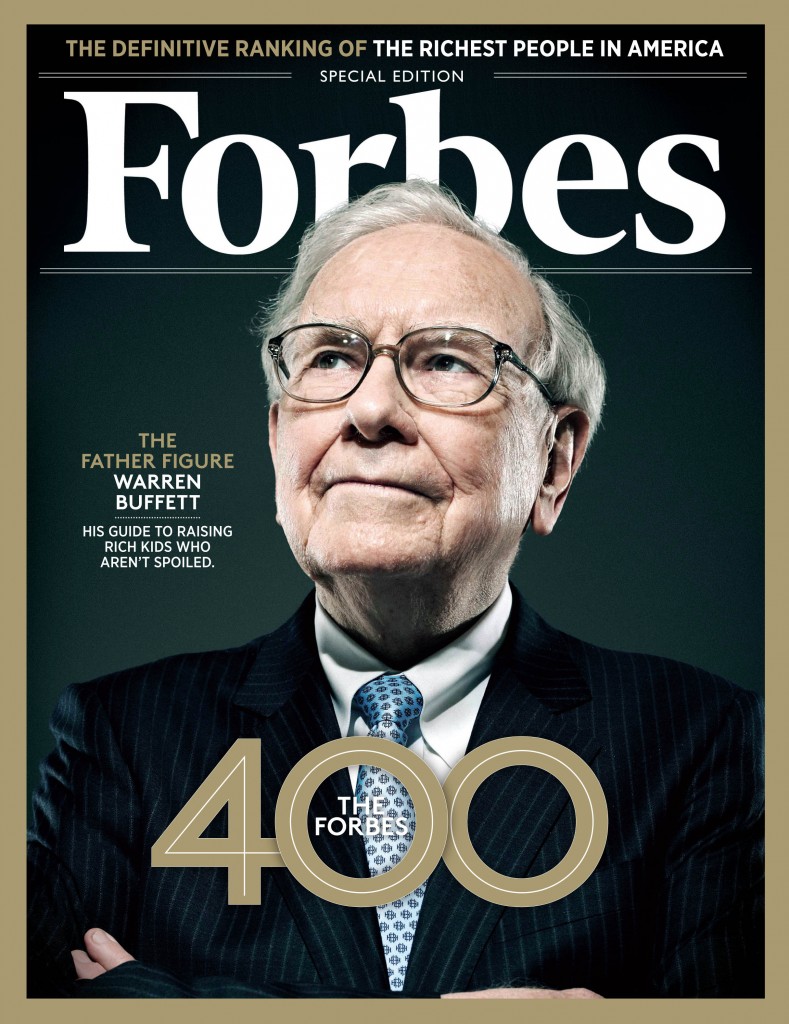
Sixty-one American billionaires failed to make the new Forbes 400 Richest list. To make the cut required at least $1.3 billion.

Youth helped. Twenty members of the 400 are under age 45.

Richest woman: Christy Walton, with $34.5 billion.

Saturday, September 14, 2013

Putting on the Dog, Fifty Autumns Ago

Two more trust-and-investment ads from fifty years ago, showing that dogs can be either Old Money or New Money.

Beagling, a scaled-down alternative to fox hunting, was definitely Old Money. (Your obedient blogger remembers when The Ox Ridge Hunt Club in Darien, Connecticut had a pack of beagles.) You can sample a classic hunt in this video.


"Hound Dog," evoked in this Manufacturers Hanover ad, was surely New Money. Best known from Elvis Presley's 1956 recording, the song is considered a key link in the evolution of Rock from R&B.


One million dollars was real money in 1963. For instance, $1 million could buy 58 brand new Rolls Royces . . .

Rolls Royce: $17,000

. . . or 187 Jaguar XK-Es.

XK-E: $5,325

Monday, September 09, 2013

Can Responsible Investing Go Mainstream?

The Washington Post and The New York Times approached "responsible" investing from opposite directions the other day.

Businesses’ focus on maximizing shareholder value has numerous costs. The Post's Steven Pearlstein sees socially responsible investing as a possible antidote for Wall Street's destructive short-term focus:
[C]orporate time horizons have become shorter and shorter. The average holding periods for corporate stocks, which for decades was six years, is now down to less than six months. The average tenure of a public company chief executive is down to less than four years. And the willingness of executives to sacrifice short-term profits to make long-term investments is rapidly disappearing.
But socially responsible investing can't gain real clout, Pearlstein observes, unless it sheds its liberal-to-the-point-of-naiveté image. Perhaps that's already happening.

In Seeking Investments That Are Profitable and a Little Bit Green, the Times' Paul Sullivan reports that the responsible investing movement is becoming less single-minded, more pragmatic. Today's responsible investor, seeking well-run businesses that focus on the long term, might even buy shares in (avert your eyes, campus activists!) an oil company.

Will the pragmatic approach to socially responsible investing continue to gain traction? Will there continue to be a gender gap, or could more men learn to be thoughtful, long-term investors?

Friday, September 06, 2013

CRUTs, Collectibles and a Punch Bowl

For those with high incomes, Ashlea Ebeling points out in Forbes, the federal tax on long-term capital gain from the sale of collectibles, such as art or antiques, has risen to 31.8 percent. To eliminate tax the collector might use a charitable remainder unitrust. The charitable trust can sell the high-gain assets tax free, the donor may retain a generous lifetime income from the trust, and he or she gets a tax deduction for the estimated value of the trust "remainder."

Federal tax on capital gain from the sale of securities now rises as high as 23.8 percent, so here, too, selling via a CRUT might prove attractive.

One significant difference: When a donor moves publicly-traded shares into a CRUT and sells them tax free, the donor knows approximately how much the shares will fetch. A collector putting a family treasure up for auction ventures into the unknown.

To illustrate, consider this punch bowl. (We came across it while seeking an avatar for the figurative punch bowl that the Federal Reserve is about to take away). The silver bowl is venerable, made in New York around 1700-1710, only a few decades after the British renamed New Amsterdam.
Punch Bowl by Cornelius Kierstede

Descendants of a Boston Tory family put the bowl up for auction in 2010. Sotheby's expected it to sell for $400,000-$800,000. Instead, bidding escalated until only two contenders remained, one bidding by phone, the other an "anonymous bidder" in the auction hall.

Two million. Three million. Four million. Five million!

The anonymous bidder finally won the bowl for $5.9 million. That's by far the highest price paid at auction for a piece of American silver.

Wonder how a donor would feel if he or she realized such a windfall when selling via a tax-sheltered CRUT. Delight that what was expected to be a trust fund of $600,000 or so had ballooned to almost $6 million? Or remorse? "Why on earth did I tie up that much money!"
•
As to why the punch bowl sold for such an amazing price, that remains something of a mystery. Was it a matter of provenance? You may not know the bowl's Revolutionary-era owner, Joshua Loring, but in your school days you probably read about his pretty young wife. After the Loyalist Lorings fled their suburban home (possibly leaving the punch bowl behind) for the safety of Boston, Elizabeth Loring earned trans-Atlantic celebrity as the mistress of the British general Howe.
•
Note the sidebar to the Forbes article: Three Donors Tell Why They Set Up CRUTs.

Wednesday, September 04, 2013

The Willing Suspension of Disbelief

In 2003, a research company met with J. Ezra Merkin, a prominent Wall Street financier who had earned a fortune investing his clients’ money with Bernard L Madoff. 
During the meeting, according to a new court filing, Mr. Merkin … warned the unnamed company never to “go long in a big way” with Mr. Madoff. He joked that “Charles Ponzi would lose out because it would be called the ‘Madoff scheme,’ ” according to notes from the meeting.*** 
Some new details came from a phone call Mr. Merkin recorded during the fall of 2005, between himself and Mr. Madoff. After a different Ponzi scheme came to light involving the Bayou Group, a hedge fund firm in Stamford, Conn., Mr. Merkin told Mr. Madoff that this would further stoke suspicions about his business.
“You know, I always tell people, as soon as there is a scam in the hedge fund industry, someone is going to call about Bernie. It’s guaranteed,”••• 

Also included in the trustee’s amended lawsuit is a recounting of a meeting between Mr. Merkin and representatives of Ivy Asset Management, another firm that steered money to Mr. Madoff. At the meeting, Ivy raised questions about the uncanny consistency of Mr. Madoff’s returns.
When Mr. Merkin likened Mr. Madoff to the wizard of Oz, an employee at Ivy said, “Toto is still tugging at the curtain.”
To which Mr. Merkin replied, “The curtain is winning.”
Until Madoff was finally arrested in 2008, Merkin and others kept feeding millions into the massive fraud. Merkin himself claims to have lost $100 million.

Monday, September 02, 2013

Marilyn Monroe: Still Making Millions

Five years ago we noted that Marilyn Monroe's estate would not be able to cash in on the use of her name and image because she died a resident of New York. The choice of domicile apparently was made for estate tax purposes, and last year a Court of Appeals ruled that her estate cannot retroactively switch her domicile to California.

Nevertheless, Marilyn keeps on making money hand over fist. And why not? As it says here: she can't misbehave like Miley Cyrus.

Tuesday, August 27, 2013

The Philanthropreneurs

Could  profit-making entities do better than charities to serve some areas of the public good? Bruce Bartlett touches upon the question in his second discussion of the charitable deduction. (Jim Gust linked to the first installment here.)

Philanthropreneurs have made news lately. Jeff Bezos has bought The Washington Post, Red Sox owner Paul Henry has agreed to nurture The Boston Globe, and hedge-fund tycoon John A. Paulson has rescued the venerable Steinway piano company. Their common goal: preservation and enhancement of organizations that contribute more to society than they are likely to earn in profits.


A pioneer philanthropreneur was Paul Newmen. A generation ago he began to market a commercial version of his home-made salad dressing, pledging to give away all profits. Now vastly expanded, Newman's Own has generated hundreds of millions of dollars for charity.

Say, there's an idea . . . . What if Jeff Bezos sold digital WP subscriptions to Amazon customers with the promise that once the subscriber base reached a certain level, all profits earned would be plowed into additional good works?

Sunday, August 25, 2013

Muriel Siebert: “It Was 1,365 Men and Me”

Muriel Siebert, a Determined Trailblazer for Women on Wall Street, Dies at 80

J. D. Salinger 2.0?

More stories about the Glass family, and the Caulfields, and World War II? Oh my!

According the the creator of a upcoming documentary film and companion book on J. D. Salinger, the reclusive writer authorized the posthumous publication of never-seen short stories, a World War II novel and a volume devoted to Hindu philosophy. The NY Times reports that the first new Salinger book is supposed to appear in 2015.

Were Salinger's alleged instructions reflected in the values listed for his unpublished works on his federal estate tax return? Has the IRS OK'd these values? Stay tuned.

Thursday, August 22, 2013

Brooke Astor's Son Released From Jail

Imprisoned in June, Anthony Marshall has been granted medical parole. According to The Daily News, the Manhattan District Attorney's office is not amused.

50 Wealthiest Members of Congress


Looking for wealth to manage? Try Capitol Hill. Some members of Congress have made big money, others have inherited big money, still others married big money. The Hill lists the top 50.

Wednesday, August 21, 2013

IRS: Michael Jackson Was Really Rich

It figures: The IRS wants a lot more federal estate tax from Michael Jackson's estate, leading to a fight in tax court. Contested valuations involve, among other estate assets, a Bentley and Jackson's "image and likeness."

Neither the estate's nor the IRS's valuation of the estate is reported, but Jackson's post-mortem earning power has proved strong. His estate took in $170 million in 2011 and $145 million in 2012. No living singer did as well.

Tuesday, August 20, 2013

Charitable deduction, pro and con

Bruce Bartlett lays out the arguments.

Personally, as I've state many times, I believe that the charitable deduction and tax-exempt statuses of all kinds have to be eliminated.  They are grossly unfair.

Monday, August 12, 2013

Burnishing the Image of Wealth Managers, 1963

Fifty years ago, stockbrokers didn't always get much respect. "My broker?" you can almost hear Mad Men's Roger Sterling ask, "You mean the guy who churns my account to pay for his yacht?"

Merrill Lynch promoted a classier image. The wire house wanted its registered reps to be seen as gentlemen and scholars.

Brooks Brothers suits provided the gent look. Weekly columns in newspapers and The New Yorker created a scholarly aura. This one calls on an English clergyman from a couple of centuries ago to endorse the notion that a little greed is good.
•
Buy-side wealth managers (a term unused if not unknown in 1963) at bank trust divisions had their own image problems: Stuffy. Dull as ditch water. Not really with it.

To promote the feeling that trust officers were regular fellows, the copywriters for Chase Manhattan's nest egg ads adopted an unbankerly informality. What bank today would describe its trust staff as "eagle-eyed and rock steady?"

Serendipitously, this ad fits nicely with the current meteor showers we're enjoying.


Saturday, August 10, 2013

Living Like a Millionaire, on $30,000

The campaign by fast-food workers for higher pay, like $15 an hour, leads to a striking comparison.

Assuming full-time employment (perhaps a stretch in the case of fast-food jobs) $15 an hour produces an annual income of about $30,000.

Using Tiger 21's rule of thumb, a millionaire – that is, someone with investable assets of $1 million – should spend no more than 3% a year. Result: an annual income of $30,000.

Related posts
Millionaires Aren’t What They Used To Be

Thursday, August 08, 2013

Two Tax Breaks Too Big to Cancel

We'd all like a simpler, fairer federal income tax. We all cherish our tax breaks. Stalemate!

Guess tax reform will have to wait a while.

In the meantime, Bruce Bartlett has launched a helpful series of Economix posts, explaining how the major "tax expenditures" came to be.

Employer-provided health insurance is the most generous federal income tax break by far. Did you know the exclusion dates back to 1918? Health insurance was a rarity back then because medical expenses (no antibiotics, no artificial joints, no stenting procedures like that performed on George W. Bush) were low. Besides, few Americans needed tax breaks. In 1940 only about 3 percent of the population paid income tax.

During WWII employers started offering health insurance as a way to get around wage controls. When high tax rates persisted after the war, the popularity of the exclusion solidified.

Eliminating the tax break for health insurance, Bartlett points out, would save more than enough to pay all the interest on our National Debt.  Don't hold your breath.

Mortgage interest deduction. The deduction for interest paid on home mortgages has no redeeming virtues. Without it, say economists, the net cost of acquiring a home would remain about the same. The deduction itself is something of a fluke – the sole survivor from times gone by, when interest on all personal borrowing was deductible as the equivalent of a business expense.

One argument for preserving the deduction only for mortgage interest was that Americans weren't saving enough. By buying a home and paying off the mortgage, they would have less expense and more security in retirement. But even if the deduction mildly encourages home buyership, it surely discourages outright ownership. With the rampant use of tax-favored home-equity loans and refinancings, goodbye equity buildup! And in too many cases, goodbye retirement security.

The clean slate approach to tax reform sounds good in theory. In practice all tax expenditures can claim to "help grow the economy, make the tax code fairer, or effectively promote other important policy objectives."

Here's a better approach: Eliminate all tax breaks for some taxpayers unless it can be shown that the result is not unfair to other taxpayers.