The average long-term-government-bond fund had lost 2.25% in the past four weeks and 4.23% in the past three months, according to Chicago-based Morningstar Inc.
Monday, April 17, 2006
Time to exit the bond market?
That's what some of the pros seem to think. As the yield curve comes out of its inversion, investors at the longer end of the spectrum are losing money.


Saturday, April 15, 2006
Did you know the Titanic sank on April 15th?
Trivia from today's Wall Street Journal:
"April 15 is officially tax day, but it is also: Leonardo da Vinci's birthday, the day Abraham Lincoln died, the day General Electric was incorporated, the day the Titanic sank and the day that McDonald's served its first hamburger. "
"April 15 is officially tax day, but it is also: Leonardo da Vinci's birthday, the day Abraham Lincoln died, the day General Electric was incorporated, the day the Titanic sank and the day that McDonald's served its first hamburger. "
Friday, April 14, 2006
Keep paying until April 26
That's "Tax Freedom" day this year, calculated byThe Tax Foundation. It seems like just two or three years ago that Tax Freedom day was April 16, the earliest date in the last quarter century for fulfilling our obligations to the government.
According to Bruce Bartlett, citing a different Tax Foundation study, 24% of Americans think that the appropriate aggregate tax burden should be less than 10% of person's income. 43% vote for 10% to 20%, and 22% say no more than 30%. Put another way, fully 89% of the country believes that the government claim on family income should not exceed 30%.
Which is just about where the aggregate tax burden is, at 28.5% of GDP.
Ah well, at least we're not quite at the modern record, set in 2000, of a Tax Freedom day of May 3. But if the Congress continues to dither about the Alternative Minimum Tax, that could quickly change.
According to Bruce Bartlett, citing a different Tax Foundation study, 24% of Americans think that the appropriate aggregate tax burden should be less than 10% of person's income. 43% vote for 10% to 20%, and 22% say no more than 30%. Put another way, fully 89% of the country believes that the government claim on family income should not exceed 30%.
Which is just about where the aggregate tax burden is, at 28.5% of GDP.
Ah well, at least we're not quite at the modern record, set in 2000, of a Tax Freedom day of May 3. But if the Congress continues to dither about the Alternative Minimum Tax, that could quickly change.
If things are so bad, then why are they so good?
That's the observation Larry Kudlow concludes this commentary with, linking to a Forbes piece by Rich Karlgard.
Apparently roughly 60% of Americans think that the economy is doing poorly. Which is hard to reconcile with:
• GDP growing at 3.7%;
• unemployment persistently well below 5%, a feat once thought impossible;
• the budget deficit, as a percentage of GDP, is at the middle of the range over the last 30 years.
Karlgard concludes that we're mostly uncomfortable with the accelerating rate of change, a phenomenon that shows no sign of slowing.
Change is certainly a two-edged sword.
Apparently roughly 60% of Americans think that the economy is doing poorly. Which is hard to reconcile with:
• GDP growing at 3.7%;
• unemployment persistently well below 5%, a feat once thought impossible;
• the budget deficit, as a percentage of GDP, is at the middle of the range over the last 30 years.
Karlgard concludes that we're mostly uncomfortable with the accelerating rate of change, a phenomenon that shows no sign of slowing.
Change is certainly a two-edged sword.
An unqualified endorsement
I am the proud new owner of one of the Intel-based iMacs. It is terrific. Front Row, the new application for displaying photos or listening to iTunes, has the bugs worked out, so far as I can tell.
And the Internet seems to go so much faster now.
And the Internet seems to go so much faster now.
Thursday, April 13, 2006
Unitrusts: a nice idea that doesn't work?
When I read the study linked by Jim Gust in a recent post, Prudent Investing of Trust Assets, I realized I shouldn't have skipped that Statistics course. Still, it looks like the introduction of the reform known as the Uniform Prudent Investing Act in some states had little effect on the more general growth o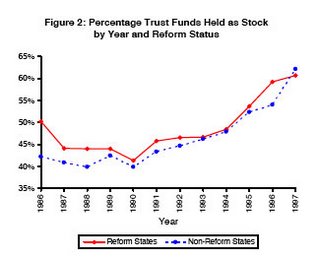 t stocks as trust investments.
Too bad the authors of the study couldn't find useful data for the 1998-2004 period, when unitrusts began to get more recognition. But I'm guessing the lines on the chart shown here would have simply moved on up, with little divergence, through 1999, then headed down.
I've assumed that unitrusts were a useful idea, expecially in recent years, when both bond yields and dividend yields gave income beneficiaries slim pickings. But that was before I came across this article from last year's Real Property, Probate and Trust Journal, by Joel C. Dobris.
The author's particular quarrel is with the widely-used unitrust withdrawal rate of 5%. Dobris rightly argues that the rate is too high and likely to shortchange the remainder beneficiaries in the long run.
If Dobris writes short articles, this isn't one of them. Even so, give it a read when you have time. He touches on a lot of the psychological quirks that lead investors, and trust settlors, to illogical assumptions.
 t stocks as trust investments.
Too bad the authors of the study couldn't find useful data for the 1998-2004 period, when unitrusts began to get more recognition. But I'm guessing the lines on the chart shown here would have simply moved on up, with little divergence, through 1999, then headed down.
I've assumed that unitrusts were a useful idea, expecially in recent years, when both bond yields and dividend yields gave income beneficiaries slim pickings. But that was before I came across this article from last year's Real Property, Probate and Trust Journal, by Joel C. Dobris.
The author's particular quarrel is with the widely-used unitrust withdrawal rate of 5%. Dobris rightly argues that the rate is too high and likely to shortchange the remainder beneficiaries in the long run.
If Dobris writes short articles, this isn't one of them. Even so, give it a read when you have time. He touches on a lot of the psychological quirks that lead investors, and trust settlors, to illogical assumptions.
Monday, April 10, 2006
When she died, was Marilyn Monroe a Californian or a New Yorker?
The answer to that question could be worth millions, as explained in "A battle erupts over the right to market Marilyn."
The reason: unlike copyrights, which are protected by federal law, publicity rights are a creature of state laws, resulting in a legal patchwork. Some states, including New York, refuse to acknowledge or protect the publicity rights of dead celebrities, so they cannot be bequeathed in a will. California does grant postmortem publicity rights, making it possible for heirs to pursue profits for decadeAnd where was Marilyn Monroe's will probated? New York!
Sunday, April 09, 2006
"Sell me a more expensive index fund, please!"
From time to time the Senior Assistant Blogger sounds off about the high expenses imposed on investors. Here's a good reason to pay him no heed, from Mark Hulburt's column in The New York Times:
MANY index funds track the Standard & Poor's 500, but they differ from one another in one major respect: their fees. You'd think that it would be obvious to investors to pick the fund that charges the least. But you'd be wrong.If the best and brightest at our graduate schools of business can't grasp mutual fund costs, what chance has the average investor?
In fact, this truth was anything but obvious to a group of elite students. In an elaborate simulation created by several researchers, many students at Harvard and the Wharton School of the University of Pennsylvania failed to select the lowest-cost index fund for their portfolios, even when they were all but spoon-fed the right answer.
Friday, April 07, 2006
Financial Advice for the 'Mass Affluent'
Plenty of food for thought in this New York Times article, "Financial Advice for the 'Mass Affluent'."
Some 22 million American households have between $100,000 and $1 million to invest. Many of them will be joining the ranks of U.S. millionaires.
"These investors don't want packaged products, " says financial planner Debra Brede. "They want a tailored suit at a good price. They want value. This segment is so underserved that they are turning to their accountant or insurance agent for financial assistance and they end up getting sold whole life insurance instead of a personalized financial plan."
Many Mass Affluents don't see themselves as Merrill Lynch clients. They're not likely to look up the brokerage or wealth-management people at a large bank, either.
How can these households be provided with the the long-term guidance they want and need?
How can they be served without high fees and commissions that eat up too much of their nest eggs?
What marketing tools can be devised to attract these investors in a cost-controlled manner?
(Hey, nobody said this business was easy!)
Some 22 million American households have between $100,000 and $1 million to invest. Many of them will be joining the ranks of U.S. millionaires.
"These investors don't want packaged products, " says financial planner Debra Brede. "They want a tailored suit at a good price. They want value. This segment is so underserved that they are turning to their accountant or insurance agent for financial assistance and they end up getting sold whole life insurance instead of a personalized financial plan."
Many Mass Affluents don't see themselves as Merrill Lynch clients. They're not likely to look up the brokerage or wealth-management people at a large bank, either.
How can these households be provided with the the long-term guidance they want and need?
How can they be served without high fees and commissions that eat up too much of their nest eggs?
What marketing tools can be devised to attract these investors in a cost-controlled manner?
(Hey, nobody said this business was easy!)
Thursday, April 06, 2006
The Fed looks at the wealthy. Read all about it
Check out Currents and Undercurrents: Changes in the Distribution of Wealth, 1989-2004 for all you need to know about the size and shape of your market.
Looking for business from the cream of the market, the top 1% of wealthholders? Then you're looking for those with a minimum of $6 million!
Looking for business from the cream of the market, the top 1% of wealthholders? Then you're looking for those with a minimum of $6 million!
Wednesday, April 05, 2006
Prudent investing of trust assets
In 1994 the Uniform Prudent Investor Act (UPIA) was promulgated, and has since been adopted in 49 states. UPIA includes an explicit duty to diversify trust assets, and provides that a “trustee’s investment and management decisions respecting individual assets are evaluated not in isolation, but in the context of the trust portfolio as a whole and as a part of an overall investment strategy having risk and return objectives reasonably suited to the trust.”
UPIA applied to existing trusts as well as trusts created after its adoption. If prior law constrained professional fiduciaries and encouraged overly conservative investments, the change in law could have led to a shift in investment strategies as the constraints were removed. Is that what happened?
That’s the question that law professors Max M. Schanzenbach and Robert H. Sitkoff examined in “Did Reform of Prudent Trust Investment Laws Change Trust Portfolio Allocation?” (December 2005,).
Study results
The professors crunched data from the Federal Financial Institutions Research Council and the FDIC for the period from 1986-1997, so investment practices from before and after UPIA adoption are represented. These reports break down trust holdings into ten categories. One of these categories includes stocks and mutual fund shares. Following exhaustive statistical analysis, the professors concluded that:
• After a state adopted UPIA, the gross stock investments of trusts increased by from 1.5% to 4.5%, compared to states that had not yet reformed their law.
• Before reform, stock investments averaged 41% of trust assets, and after reform the share rose to 47%.
• During the period studied there was also a strong shift toward stocks independent of the adoption of UPIA, an increase of from 10 to 17 percentage points. This may be attributable in part to the bull market during the study period.
UPIA applied to existing trusts as well as trusts created after its adoption. If prior law constrained professional fiduciaries and encouraged overly conservative investments, the change in law could have led to a shift in investment strategies as the constraints were removed. Is that what happened?
That’s the question that law professors Max M. Schanzenbach and Robert H. Sitkoff examined in “Did Reform of Prudent Trust Investment Laws Change Trust Portfolio Allocation?” (December 2005,).
Study results
The professors crunched data from the Federal Financial Institutions Research Council and the FDIC for the period from 1986-1997, so investment practices from before and after UPIA adoption are represented. These reports break down trust holdings into ten categories. One of these categories includes stocks and mutual fund shares. Following exhaustive statistical analysis, the professors concluded that:
• After a state adopted UPIA, the gross stock investments of trusts increased by from 1.5% to 4.5%, compared to states that had not yet reformed their law.
• Before reform, stock investments averaged 41% of trust assets, and after reform the share rose to 47%.
• During the period studied there was also a strong shift toward stocks independent of the adoption of UPIA, an increase of from 10 to 17 percentage points. This may be attributable in part to the bull market during the study period.
Saturday, April 01, 2006
A suspicious will, a not-quite widow, and now—murder!
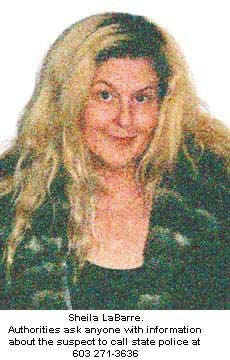 From the front page of the Portsmouth, New Hampshire Herald comes this story. (Remember, Peyton Place was set in New Hampshire!)
Police suspect Sheila LaBarre murdered a recent arrival at her Epping, New Hampshire farm, inherited from her late "husband," and burned up the body.
While they look for her, a number of questions remain unanswered.
Did the late Wilfred LaBarre really intend to disinherit his kids? If so, why did he leave money for them hidden around his house? And how did Sheila LaBarre find that money if she was off living with another guy?
We'll just have to wait for futher chapters in the saga.
Thursday, March 30, 2006
The good news: Millions of Boomers have built High Net Worths on their own
Last year almost nine million U.S. households had a net worth of at least $1 million, excluding primary residence. The heads of most of those millionaire households were under 60. Who says Boomers can't hang onto money?
Saving and investment was the primary source of this household wealth. Only 19% reported having shared ownership of a business or professional partnership.
Two out of every five millionaire households don't yet have an investment advisor. Gentlemen and ladies, start your sales presentations!
Saving and investment was the primary source of this household wealth. Only 19% reported having shared ownership of a business or professional partnership.
Two out of every five millionaire households don't yet have an investment advisor. Gentlemen and ladies, start your sales presentations!
The bad news: Most Boomers won't inherit more than chump change
Most Americans born between 1946 and 1964 have little hope of an inheritance, as The New York Times reported recently.
Hundreds of billions of dollars are passing through estates each year, but about 7% of estates account for half the total wealth.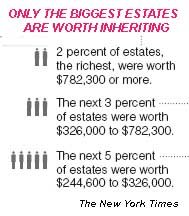
Hundreds of billions of dollars are passing through estates each year, but about 7% of estates account for half the total wealth.
Tuesday, March 21, 2006
Why Americans save less than nothing (Hint: it's homeland security)
Randy Cassingham's This is True newsletter called my attention to this amazing story, reported by the Providence Journal.
Running up debt has become such a dominant theme of national policy that individual Americans who don't follow suit are now suspected of treason.
All the poor guy did was try to pay down his credit card debt. That Un-American activity was sufficient to ID him as a potential terrorist. Presumably, Dubya, Dick and Rummy figured Walter Soehnge was recharging his available credit so he could buy a plane ticket and crash into the Washington Monument.
I sure can see why Walter was "madder than a panther with kerosene on his tail."
Looks like it's time for a career change, folks. Get out of wealth management and into debt counselling!
Running up debt has become such a dominant theme of national policy that individual Americans who don't follow suit are now suspected of treason.
All the poor guy did was try to pay down his credit card debt. That Un-American activity was sufficient to ID him as a potential terrorist. Presumably, Dubya, Dick and Rummy figured Walter Soehnge was recharging his available credit so he could buy a plane ticket and crash into the Washington Monument.
I sure can see why Walter was "madder than a panther with kerosene on his tail."
Looks like it's time for a career change, folks. Get out of wealth management and into debt counselling!
Monday, March 20, 2006
Why worry about inflation? Because it's creepy.
Consumer prices barely budged last month. For the twelve months ending in February, the CPI crept up a mere 3.6%.
Somehow, inflation in real life doesn't seem that tame. Wondering why, I consulted the list of price changes recorded by The Wall Street Journal in its year-end reviews. Here's a sampling of price changes from 2000 to 2005:
To be fair, a Big Mac isn't the only item that costs less than it did five years ago. Prices of laptops and TVs have come down, too. But the proliferation of technical gadgets has probably cancelled out any net advantage for many families. Ringtones, iPods, iTunes downloads and assorted other teenage necessities were luxuries or unobtainable five or ten years ago.
Even 3.6% inflation can get nasty in the long run. The other day on the radio, a financial planner was urging 40-year-olds with no savings to start investing enough to give them a $1-million retirement fund by age 65. That won't be easy, and it may not be adequate.
If inflation creeps at an average rate of only 3.6%, their million will have no more buying power than $415,000 or so has today.
Somehow, inflation in real life doesn't seem that tame. Wondering why, I consulted the list of price changes recorded by The Wall Street Journal in its year-end reviews. Here's a sampling of price changes from 2000 to 2005:
Big Mac DOWN 4%
Pair of jeans UP 4%For some of the above, obviously, inflation has done more than creep.
Midsize auto UP 9%
Funeral UP 16%
Movie ticket UP 22%
Unleaded gasoline UP 49%
Year in college (Penn State) UP 54%
Single-family home UP 55%
Day in hospital UP 87%
Clearing clogged sink (Roto Rooter) UP 138%
To be fair, a Big Mac isn't the only item that costs less than it did five years ago. Prices of laptops and TVs have come down, too. But the proliferation of technical gadgets has probably cancelled out any net advantage for many families. Ringtones, iPods, iTunes downloads and assorted other teenage necessities were luxuries or unobtainable five or ten years ago.
Even 3.6% inflation can get nasty in the long run. The other day on the radio, a financial planner was urging 40-year-olds with no savings to start investing enough to give them a $1-million retirement fund by age 65. That won't be easy, and it may not be adequate.
If inflation creeps at an average rate of only 3.6%, their million will have no more buying power than $415,000 or so has today.
Friday, March 17, 2006
The Dow hit five-year highs this week. Is it on its way to the stars?
To celebrate the Dow's resurgence, you and your clients might enjoy tackling the question Warren Buffet posed in his Berkshire-Hathaway shareholders letter:
Q. Between December 31, 1899 and December 31, 1999, the Dow
rose from 66 to 11,497. Guess what annual growth rate is required to produce this result.
A. The Dow increased from 65.73 to 11,497.12 in the 20th century, and that amounts to a gain of 5.3% compounded annually. (Investors would also have received dividends, of course.) To achieve an equal rate of gain in the 21st century, the Dow will have to rise by December 31, 2099 to – brace yourself – precisely 2,011,011.23. But I’m willing to settle for 2,000,000 . . . .
Q. Between December 31, 1899 and December 31, 1999, the Dow
rose from 66 to 11,497. Guess what annual growth rate is required to produce this result.
A. The Dow increased from 65.73 to 11,497.12 in the 20th century, and that amounts to a gain of 5.3% compounded annually. (Investors would also have received dividends, of course.) To achieve an equal rate of gain in the 21st century, the Dow will have to rise by December 31, 2099 to – brace yourself – precisely 2,011,011.23. But I’m willing to settle for 2,000,000 . . . .
Thursday, March 09, 2006
To hedge-fund investors, those red flags still look green
 Troubles at Atlanta Hedge Fund Snare Doctors, Football Players, The Wall Street Journal reports. Which proves that wealthy doctors and millionaire footballers are just as colorblind as investors in various other hedge funds, like Bayou, that now exist only in painful memory.
Fund manager Kirk S. Wright said he generated returns of 27% per annum, the Journal notes:
In hindsight, there were many red flags at International Management: unusually consistent high returns, vague descriptions of investment strategies, aggressive marketing, no auditing, and secretive behavior by the manager. The firm's demise comes as hedge funds, which are lightly regulated investment vehicles for institutions and wealthy investors, face new SEC registration requirements that have stirred a debate about how much oversight is necessary.Elsewhere in the news today, it was reported that a new miracle drug might cure those addicted to gambling. Do you suppose hedge-fund investors could negotiate a discount if they offered to buy the stuff by the case?
Wednesday, March 08, 2006
If proprietary funds can't make the cut, what's next?
 Today the Riverwalk Golf Club in San Diego hosted the premier sporting event of the year for trust and wealth managers: the ABA Golf Tournament.
Tomorrow, golf bags and plus fours will be out of sight as the 2006 Wealth Management and Trust Conference settles down to business. As in recent years, one high-priority topic will be "open architecture." Clients don't like the idea of being tied to a bank's proprietary funds. Judging from the Conference program, neither do beneficiaries: sometimes they get mad enough to sue.
Citigroup and Merrill Lynch have already sold or spun off their proprietary funds. Major banks are expected to follow suit.
What's next? A recent Barron's cover story (only available to paid subscribers, alas) spotlights separately-managed accounts. Investors in separate accounts own actual stocks, not units of a comingled fund. Separate accounts offer tax-management advantages, plus the opportunity for some customizing, such as no tobacco stocks. SA's can be used as core holdings or, like hedge funds, as niche products.
As of Dec. 31, Barrons's notes, assets in retail separate accounts rose to $678 billion, 18% above the total a year earlier. That surge followed a 16% increase in 2004. Major wirehouses have been the big distributors of separate accounts thus far, but Barron's sees banks gaining a 10% market share by 2010.
Separate accounts tend to have high minimums, though they're coming down. And they tend to be pricey, with average annual expense of 1.7% by one estimate. But these days, even mutual-fund expenses approach 2% on average.
The lower cost alternative? Exchange-traded funds. Independent investment advisers are discovering they can use a handful of ETFs and low-cost bond funds to produce efficient portfolios simply. And annual expense is minimal. Barron's notes that the iShares Russell 3000 (IWV), a popular exchange-traded fund, has an expense ratio of 0.20%.
What's your institution doing?
How wealth managers rebut Buffet
Warren Buffet is a great communicator but an awful poster boy for the premise that investment managers are a waste of money. If you looked at his latest letter to Berkshire-Hathaway shareholders (see previous post), you saw the evidence.
In the long run, like from 1965 through last year, Buffet hasn't just beaten the market, he's trounced and trummeled it:
Berkshire-Hathaway average annual return: 21.5%
S&P 500 average annual return: 10.3%
Buffet's record demonstrates that some people really can produce superior long-term returns,
Can these superior performers be identified? Yes, at least if you're Yale's David Swensen. Over 20 years, the managers he chose for Yale's endowment racked up a 16% annual return.
As long as people like Buffet and Swensen exist, affluent investors will hope for above-average returns. And they'll be willing to pay for investment advice.
In the long run, like from 1965 through last year, Buffet hasn't just beaten the market, he's trounced and trummeled it:
Berkshire-Hathaway average annual return: 21.5%
S&P 500 average annual return: 10.3%
Buffet's record demonstrates that some people really can produce superior long-term returns,
Can these superior performers be identified? Yes, at least if you're Yale's David Swensen. Over 20 years, the managers he chose for Yale's endowment racked up a 16% annual return.
As long as people like Buffet and Swensen exist, affluent investors will hope for above-average returns. And they'll be willing to pay for investment advice.
Monday, March 06, 2006
Wealth managers (and especially Hedge Hogs) receive a Buffeting
When Yale's great investment manager, David Swensen, wrote an earnest but dull book about the high cost of employing generally useless vendors of market-beating techniques, most investors didn't read it.
When John Bogle, Vanguard's patriarch, rants about high investment costs, he draws only limited attention.
But Swensen and Bogle are communications amateurs. The Oracle of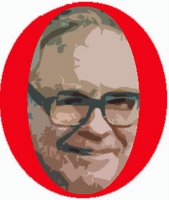 Omaha is a pro.
In his letter to Berkshire-Hathaway shareholders, Warren Buffet turns his skills to the subject of "How to minimize your investment returns." Better read it. A lot of your clients and prospects will be reading it, too.
Buffet argues that investors are destined to receive returns substantially below the theoretical averages because they repeatedly shoot themselves in the wallet.
To visualize these self-inflicted wounds, Buffet asks us to imagine that a single family, the Gotrocks, owns every business whose shares are available to investors.
Collectively, the Gotrocks enjoy a return equal to the earnings of their businesses, less taxes. Individually, various members of the Gotrocks clan figure they can do better. So they hire a helper, a broker. When the helper does nothing but cost them money, they hire another helper, a money manager to tell the broker what to buy. And when they realize they're even worse off, they hire a financial planner or consultant to help them pick the right money managers.
What fools these mortals be, says the Oracle:
When John Bogle, Vanguard's patriarch, rants about high investment costs, he draws only limited attention.
But Swensen and Bogle are communications amateurs. The Oracle of
 Omaha is a pro.
In his letter to Berkshire-Hathaway shareholders, Warren Buffet turns his skills to the subject of "How to minimize your investment returns." Better read it. A lot of your clients and prospects will be reading it, too.
Buffet argues that investors are destined to receive returns substantially below the theoretical averages because they repeatedly shoot themselves in the wallet.
To visualize these self-inflicted wounds, Buffet asks us to imagine that a single family, the Gotrocks, owns every business whose shares are available to investors.
Collectively, the Gotrocks enjoy a return equal to the earnings of their businesses, less taxes. Individually, various members of the Gotrocks clan figure they can do better. So they hire a helper, a broker. When the helper does nothing but cost them money, they hire another helper, a money manager to tell the broker what to buy. And when they realize they're even worse off, they hire a financial planner or consultant to help them pick the right money managers.
What fools these mortals be, says the Oracle:
The Gotrocks, now supporting three classes of expensive Helpers, find that their results get worse, and they sink into despair. But just as hope seems lost, a fourth group – we’ll call them the hyper-Helpers – appears. These friendly folk explain to the Gotrocks that their unsatisfactory results are occurring because the existing Helpers – brokers, managers, consultants – are not sufficiently motivated and are simply going through the motions. “What,” the new Helpers ask, “can you expect from such a bunch of zombies?”
The new arrivals offer a breathtakingly simple solution: Pay more money. Brimming with selfconfidence, the hyper-Helpers assert that huge contingent payments – in addition to stiff fixed fees – are what each family member must fork over in order to really outmaneuver his relatives.
The more observant members of the family see that some of the hyper-Helpers are really just manager-Helpers wearing new uniforms, bearing sewn-on sexy names like HEDGE FUND or PRIVATE EQUITY. The new Helpers, however, assure the Gotrocks that this change of clothing is all-important, bestowing on its wearers magical powers similar to those acquired by mild-mannered Clark Kent when he changed into his Superman costume. Calmed by this explanation, the family decides to pay up.
And that’s where we are today: A record portion of the earnings that would go in their entirety to owners – if they all just stayed in their rocking chairs – is now going to a swelling army of Helpers. Particularly expensive is the recent pandemic of profit arrangements under which Helpers receive large portions of the winnings when they are smart or lucky, and leave family members with all of the losses – and large fixed fees to boot – when the Helpers are dumb or unlucky (or occasionally crooked).
Thursday, March 02, 2006
What can you promise new wealth-management clients?
A savvy trust-company exec once told me that affluent investors won't let you manage their money unless you promise them results. That's a problem. Most investment promises aren't worth the hot air required to make them. But the trust-company exec had a solution:
"O.K., I tell the guy. Give us your money to invest, and I promise we'll lose it more slowly than you'd lose it yourself!"
That's still a pretty safe promise to make, according to Mark Hurbert's column in The New York Times:
The Dumb Money pays a significant cost for moving out of stock funds they consider "cold" and moving to those they consider "hot." They probably cut 1% or more off their annual return. And that's in addition to the 1% or more by which managed funds tend to lag the market because of annual fees and expenses.
When you help HNW investors avoid being Dumb Money, you do them a service.
"O.K., I tell the guy. Give us your money to invest, and I promise we'll lose it more slowly than you'd lose it yourself!"
That's still a pretty safe promise to make, according to Mark Hurbert's column in The New York Times:
MOST mutual fund investors have only themselves to blame if their portfolios seriously lag behind the market. That is the conclusion of a new study that says the typical investor has an atrocious sense of timing.Lamont and Frazzini note that some investors do seem to be Smart Money when it comes to picking a hot mutual fund, one that will do well for the next quarter. But in the longer run, "individual investors have a striking ability to do the wrong thing. They send their money to mutual funds which own stocks that do poorly over the subsequent years."
People tend to dump mutual funds just before the funds enter several-year periods of above-average performance, and to buy funds that are about to sag. In fact, the study found that the performance of most fund portfolios would improve markedly if the owners just left well enough alone.
The study, "Dumb Money: Mutual Fund Flows and the Cross-Section of Stock Returns," was conducted by two finance professors, Andrea Frazzini of the University of Chicago and Owen A. Lamont of Yale.
The Dumb Money pays a significant cost for moving out of stock funds they consider "cold" and moving to those they consider "hot." They probably cut 1% or more off their annual return. And that's in addition to the 1% or more by which managed funds tend to lag the market because of annual fees and expenses.
When you help HNW investors avoid being Dumb Money, you do them a service.
Sunday, February 19, 2006
Estate-tax repeal: the backstory
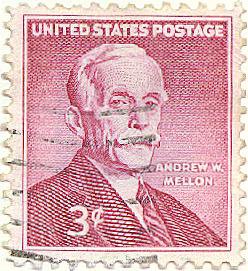 This man put forth a sucessful program for cutting income-tax rates. This man wanted to repeal the estate tax. Who was he? Andrew Mellon, the banker/industrialist turned Treasury Secretary.
You can read all about Mellon's effort, and learn why his aversion to estate taxation was influenced by the settlement of Henry Clay Frick's estate, in this article by Susan Murnane.
Will George W. Bush have better luck than Andrew Mellon had in the 1920‘s? Stay tuned.
Tuesday, February 14, 2006
Easing the Taxpayer's Burden is Expensive
 David G. Klein dreamed up a great illustration for the Sunday New York Times feature on taxes. You can see only a thumbnail here, so I've posted a detail from a scan.
The Times cites projections that the cumulative cost of extending the Bush tax cuts, presumably including repeal of the estate tax, would grow to $1.3 trillion by 2015.
The cumulative “cost” of repealing the Alternative Minimum Tax would also grow to more than $1 trillion.
How do the Administration and Congress get out of this mess? Possibly by taking a serious swing at tax reform. If reform eliminated enough special tax breaks, Congress could vote for lower tax rates in a package that would raise more revenue. But even a “stealth” tax increase is probably too risky to consider before 2007.
Meanwhile, although the federal estate tax exemption has moved up to $2 million. note this warning in another Times article:
In more than a dozen states — including New York, New Jersey, Maine, Maryland, Massachusetts, Minnesota, Kansas, Nebraska, Ohio, Oklahoma, Oregon, Rhode Island and Wisconsin — there are still state taxes on estates worth under $2 million. There is a tax on estates in this range in the District of Columbia, as well.
Monday, February 13, 2006
Death and Taxes: the Blogs
Clever dudes, those guys at The Wall Street Journal. The Blog Watch in today's Technology Report features sites related to one or another of the two inevitables..
Tax sites mentioned include Tax Guru and Roth's Tax Updates.
Inexplicably missing: Joel Schoenmeyer's Death and Taxes — The Blog.
Tax sites mentioned include Tax Guru and Roth's Tax Updates.
Inexplicably missing: Joel Schoenmeyer's Death and Taxes — The Blog.
Monday, February 06, 2006
Could there be some movement on death taxes in 2006?
27 Senators have co-signed a letter asking that a vote on estate tax repeal be scheduled before Memorial Day this year.
Will there be a vote? Probably, there is plenty of polical support, and the House already passed an estate tax repeal. Will the estate tax be repealed? Doubtful, given today's deficits. Could there be a compromise? Certainly, there's plenty of room for a tax regime both sides could live with. But both sides appear to be happier having the fight.
Will there be a vote? Probably, there is plenty of polical support, and the House already passed an estate tax repeal. Will the estate tax be repealed? Doubtful, given today's deficits. Could there be a compromise? Certainly, there's plenty of room for a tax regime both sides could live with. But both sides appear to be happier having the fight.
A potential bomb for CRUTs is defused
Last year, IRS gave estate planners heartburn with Rev. Proc. 2005-24, which discovered a hitherto unknown potential defect in all charitable remainder annuity and unitrusts. The defect was the chance that a surviving spouse might elect a statutory share, that the share might include inter vivos charitable trusts, and so the spouse might ultimately get some assets from the charitable trust. The Service's remedy was to require the spouse to waive such rights, in writing, upon the creation of the trust. Failure to comply would mean no charitable deduction, even if the spouse never ultimately made a claim against the charitable trust.
A variety of problems with this remedy have been voiced by commentators. The snarkier ones have pointed out that IRS' own CRUT and CRAT forms don't address the "problem."
"We hear you," the IRS has now said. Last year's Rev. Proc. had an effective date of June 28, 2005 (earlier-drafted documents were in the clear). In Notice 2006-15 the IRS has now suspended the effective date, and in effect suspended the procedure itself until further guidance is issued. "The Service will disregard the existence of such a right of election, even without a waiver as described in Rev. Proc. 2005-24, but only if the surviving spouse does not exercise the right of election," it concludes. Hopefully future guidance will be more practical.
A variety of problems with this remedy have been voiced by commentators. The snarkier ones have pointed out that IRS' own CRUT and CRAT forms don't address the "problem."
"We hear you," the IRS has now said. Last year's Rev. Proc. had an effective date of June 28, 2005 (earlier-drafted documents were in the clear). In Notice 2006-15 the IRS has now suspended the effective date, and in effect suspended the procedure itself until further guidance is issued. "The Service will disregard the existence of such a right of election, even without a waiver as described in Rev. Proc. 2005-24, but only if the surviving spouse does not exercise the right of election," it concludes. Hopefully future guidance will be more practical.
Which wealth-management clients are you looking for, Comfortable or Kinda Rich?
Here's a wealthy Wall Streeter's guide to the gradations of affluence, as recounted by Lee Eisenberg, author of The Number.
Which market segments are you targeting?
COMFORTABLE
The number
$1-million to $2-million
- A scaled-back lifestyle post-retirement that still includes dining and travelling modestly. A nice life, nonetheless.
COMFORTABLE PLUS
The number
$2-million to $5-million
- A scaled-back lifestyle post-retirement that still includes dining and travelling modestly. Add membership in a mid-priced club and, maybe, a small second home.
KIND OF RICH
The number
$7-million to $10-million
- People who like to stay at the Four Seasons and spend their time shuttling between expensive homes.
RICH
The number
$20-million
- Spend weekends abroad, belong to a gated golf community, charter private jets and party with wealthy people like Henry and Marie-Josee Kravis.
Which market segments are you targeting?
COMFORTABLE
The number
$1-million to $2-million
- A scaled-back lifestyle post-retirement that still includes dining and travelling modestly. A nice life, nonetheless.
COMFORTABLE PLUS
The number
$2-million to $5-million
- A scaled-back lifestyle post-retirement that still includes dining and travelling modestly. Add membership in a mid-priced club and, maybe, a small second home.
KIND OF RICH
The number
$7-million to $10-million
- People who like to stay at the Four Seasons and spend their time shuttling between expensive homes.
RICH
The number
$20-million
- Spend weekends abroad, belong to a gated golf community, charter private jets and party with wealthy people like Henry and Marie-Josee Kravis.
Monday, January 30, 2006
Why the wise wealthy need a corporate trustee
Sunday's New York Times offered an interesting discussion of incentive trusts, the pros and cons.
The article quotes a New York estate-planning attorney who gives sound advice about choosing a trustee:
The article quotes a New York estate-planning attorney who gives sound advice about choosing a trustee:
A trust that offers a dollar for every dollar earned can be unfair, the critics say, because it gives big rewards to already-successful business people and much smaller amounts to heirs who may work just as hard but have chosen careers as, say, artists or teachers. (And unless other provisions are made in the trust, homemakers and volunteers may get nothing.) Critics also say that some incentives may go so far as to pay children to provide their parents with grandchildren.
Treating siblings differently can lead to unintended consequences, said Ralph M. Engel, an estate planning lawyer in the New York City office of Sonnenschein Nath & Rosenthal, based in Chicago. "The problem is that there are too many what-ifs," he said. "What if one sibling can do something and the other can't? What if one becomes disabled or depressed or has an accident?"
Instead, Mr. Engel advises clients to write flexible trusts and to be careful in choosing trustees, who make distribution decisions.
"Pick a trustee who has the guts to say no," he said. Professional trustees, like experienced banks or trust companies, may not be easily swayed by emotional appeals. ***
After 32 years, a royal prince’s estate is finally taxed (and how!)

Queen Elizabeth's uncle, Prince Henry, Duke of Gloucester, was the last royal prince to have his baby picture taken on Queen Victoria's lap. He died in 1974, leaving an estate taxable at the rate (there was a real Labour government in those days, remember) of 75%.
Happily, a “heritage property” election allowed the Duke's executors to defer 75% taxation until the death of Princess Alice, the Duke's widow. She died in 2004, at the age of 102.
To pay the tax, Henry's son, the present Duke, put the family treasures (including Henry's christening present from Queen Victoria) up for auction at Christie's. They fetched a handsome sum, according to this Times of London report.
Read to the end of the Times article, and you also will learn why a Maori war dance was performed in the garden at Kensington Palace.
Tuesday, January 24, 2006
George Foreman on trusts and investing
Quite a guy, George Foreman. Olympic gold medalist, he boxed his way to the world heavyweight championship, retired in 1977 and became a preacher, returned to the ring when his money ran low. In 1994, at age 45, he regained the world championship.
Big George made his really big money hawking George Foreman Electric Grills, initially for 40% of the profits. In 1999 he sold the rights to his name for $127.5 million in cash plus $10 million of stock in the grill-maker, Salton Inc.
In a recent Wall Street Journal interview, Foreman talked a bit about money matters. A few excepts:
On why one of his best investments was a trust
When I first started making money from boxing, I put 25% of all my earnings into a trust fund. I made other investments during that time, in cattle and gas wells, that I lost my shirt on, but I always had the trust fund. When I retired to become a minister, I survived on that money. I learned how important it is to have something to fall back on.
On his reaction as an investor to 9/11
After 9/11 . . . I took a lot of money and told my broker to buy American company stocks. He said, "Don't you want to wait?" and I said "No, this happened to New York for a reason, to scare us." That investment paid off greatly.
On his asset allocation
I have about 35% invested in stocks, about 35% in bonds and the rest in real estate. I like investing in real estate, it's first in my heart. I've bought and sold a lot of property all over the country. I have a ranch in east Texas that I particularly love and will keep until I pass. Then maybe my children can cash it in.
On obtaining investment advice
I have a lot of people who help me, but I've known from my boxing days that you should never rely on just one person. You must be diverse in the information you receive. Because investors are just like boxers, they get punch-drunk, they get burned out, and no one knows it until their legs start wiggling.
On his best investment
I still believe my best investment has been...the money I put into universities [to fund scholarships]. I never call them donations, I call them investments.
Big George made his really big money hawking George Foreman Electric Grills, initially for 40% of the profits. In 1999 he sold the rights to his name for $127.5 million in cash plus $10 million of stock in the grill-maker, Salton Inc.
In a recent Wall Street Journal interview, Foreman talked a bit about money matters. A few excepts:
On why one of his best investments was a trust
When I first started making money from boxing, I put 25% of all my earnings into a trust fund. I made other investments during that time, in cattle and gas wells, that I lost my shirt on, but I always had the trust fund. When I retired to become a minister, I survived on that money. I learned how important it is to have something to fall back on.
On his reaction as an investor to 9/11
After 9/11 . . . I took a lot of money and told my broker to buy American company stocks. He said, "Don't you want to wait?" and I said "No, this happened to New York for a reason, to scare us." That investment paid off greatly.
On his asset allocation
I have about 35% invested in stocks, about 35% in bonds and the rest in real estate. I like investing in real estate, it's first in my heart. I've bought and sold a lot of property all over the country. I have a ranch in east Texas that I particularly love and will keep until I pass. Then maybe my children can cash it in.
On obtaining investment advice
I have a lot of people who help me, but I've known from my boxing days that you should never rely on just one person. You must be diverse in the information you receive. Because investors are just like boxers, they get punch-drunk, they get burned out, and no one knows it until their legs start wiggling.
On his best investment
I still believe my best investment has been...the money I put into universities [to fund scholarships]. I never call them donations, I call them investments.
Monday, January 23, 2006
Please don't leave me a million!
Trusts are trendy, as we noted recently. Today's example, Karen Hube's discussion of disclaimers in the Wall Street Journal. She puts in a good word for GSTs:
If your benefactor is still alive, the most drastic option is simply to request to be left out of a will. Before going that route, however, you should consider a more flexible, if complicated, alternative: You can ask that the benefactor, rather than naming you directly as an heir, instead establish a "generation-skipping trust" -- one that names your children as the beneficiaries.Question is, how rich does someone have to be in order to feel comfortable with the idea of saying “please don't leave me a million"? Surveys suggest that even someone with $10 million believes he or she would be more secure with more substantial wealth.
Such an arrangement offers several benefits. First, if the need ever arises, you can draw income from the trust, even though you don't own the assets outright. Second, because you don't own the assets, the property avoids estate taxes when you die. Finally, any assets that your children don't tap during their lifetimes can be passed to the subsequent generation free of all but income taxes. If you don't have children, a generation-skipping trust can be set up for another member of the younger generation in your family -- say, a niece or a nephew.
Saturday, January 21, 2006
Trust of the Month for "transhumans:" The PRT
You can't take it with you, but you can come back and get it, as Wall Street Journal readers learn today from this article.
PRT stands for Personal Revival Trust. Perhaps a dozen or more have been set up. Here's how grantors like David Pizer of Arizona hope to leave millions to . . . themselves!
PRT stands for Personal Revival Trust. Perhaps a dozen or more have been set up. Here's how grantors like David Pizer of Arizona hope to leave millions to . . . themselves!
Like some 1,000 other members of the "cryonics" movement, Mr. Pizer has made arrangements to have his body frozen in liquid nitrogen as soon as possible after he dies. In this way, Mr. Pizer, a heavy-set, philosophical man who is 64 years olThe Journal reports that Wachovia is trustee of at least one PRT. A Wachovia estate planner recently discussed the concept at the First Annual Colloquium on the Law of Transhuman Persons in Florida.d, hopes to be revived sometime in the future when medicine has advanced far beyond where it stands today.
And because Mr. Pizer doesn't wish to return a pauper, he's taken an additional step: He's left his money to himself.
With the help of an estate planner, Mr. Pizer has created legal arrangements for a financial trust that will manage his roughly $10 million in land and stock holdings until he is re-animated. Mr. Pizer says that with his money earning interest while he is frozen, he could wake up in 100 years the "richest man in the world."

Trust of the Month: The QPRT
Thanks to this New York Times article, a lot of trust clients and prospects should be asking about Qualified Personal Residence Trusts.
Does anyone care to comment on how QPRTs work out in practice?
If a house passes to several children, for instance, do they easily agree on what to do with the real estate?
If the parents stay on as renters after the end of the QPRT term, are the kids willing to spend some of the rent on maintaining the place in the manner to which the parents have been accustomed? Or do the parents simply keep paying for upkeep, looking at the payments as added "wealth transfers"?
Does anyone care to comment on how QPRTs work out in practice?
If a house passes to several children, for instance, do they easily agree on what to do with the real estate?
If the parents stay on as renters after the end of the QPRT term, are the kids willing to spend some of the rent on maintaining the place in the manner to which the parents have been accustomed? Or do the parents simply keep paying for upkeep, looking at the payments as added "wealth transfers"?
Wednesday, January 18, 2006
“A startling new retirement-planning need”
Ameriprise (the old IDS that recently severed ties with American Express) has sponsored a new study of retirement.
Most interesting finding: People nearing or in retirement worry a lot about their children's lack of financial savvy.
Coddling could be one reason. The study reports that the number of households with children over age 18 living at home increased by 69% from 2000 to 2004! Also, Boomers tend to feel they've been poor role models when it comes to demonstrating financial responsibility.
I can think of a couple of other reasons for parental worry:
• Couples who delayed having children are more likely to retire before their kids mature.
• Today's young adults tend to carry a far higher debt burden, student loans and credit-card debt, that built up during their college years.
The Ameriprise study, conducted by Ken Dychtwald and Harris Interactive, also reveals regional differences. Westerners, it seems, are more likely to prepare for retirement than easterners.
Most interesting finding: People nearing or in retirement worry a lot about their children's lack of financial savvy.
Coddling could be one reason. The study reports that the number of households with children over age 18 living at home increased by 69% from 2000 to 2004! Also, Boomers tend to feel they've been poor role models when it comes to demonstrating financial responsibility.
I can think of a couple of other reasons for parental worry:
• Couples who delayed having children are more likely to retire before their kids mature.
• Today's young adults tend to carry a far higher debt burden, student loans and credit-card debt, that built up during their college years.
The Ameriprise study, conducted by Ken Dychtwald and Harris Interactive, also reveals regional differences. Westerners, it seems, are more likely to prepare for retirement than easterners.
Subscribe to:
Posts (Atom)

 Posts
Posts


