The collaborative process is less time-consuming, less expensive and less confrontational than a traditional adversarial case. It is especially effective in disputes where monty is not the sole issue.
Friday, November 30, 2012
Full Frontal Inheritance?
From a post on Wills, Trusts & Estates Prof Blog:
 Apologies to Gerry Beyer. Couldn't resist chuckling at the typo because earlier this year I attended an excellent production of the musical. One of our daughters played in the pit band.


Thursday, November 29, 2012
Drought Hits Christmas Price Index
 The West Coast may be awash now, but soaring feed costs caused by this year's lack of rain have made Christmas birds expensive. Swans: up 11%. Geese: up almost 30%.
For the price performance of other gifts listed in The Twelve Days of Christmas, see PNC's Christmas Price Index.
Wednesday, November 28, 2012
If a $65-million Painting Cannot be Sold . . .
. . . what is the painting's taxable value in an art dealer's estate?
In the case of Robert Rauschenberg's "Canyon,"zero.
However, the newly announced settlement with the IRS requires the art dealer's heirs to "donate 'Canyon' to a museum where it would be publicly exhibited and claim no tax deduction."
 The lucky museum? The Museum of Modern Art, which agreed to add the name of dealer, Ileana Sonnabend, to the list of the museum's founders.
Her heirs had been threatened with an IRS claim of $29.2 million in estate tax plus $11.7 million in penalties.
However, the newly announced settlement with the IRS requires the art dealer's heirs to "donate 'Canyon' to a museum where it would be publicly exhibited and claim no tax deduction."

Her heirs had been threatened with an IRS claim of $29.2 million in estate tax plus $11.7 million in penalties.
Tuesday, November 27, 2012
What Each Generation of Investors Needs to Learn

Cleaned out an old file drawer and found this 1988 postcard, produced by The Merrill Anderson Company for a marketing campaign. The point of the campaign is long forgotten. The message rings true as ever.
A new tax bubble?
One idea reportedly being floated in DC is to hold the top rate at 35%, but tax the "rich" at a flat rate of 35%, so they don't get the benefit of the lower tax brackets. Sound like a win for both sides?
Personally, I hate the idea. It makes the tax code less transparent, or as I would put it, more dishonest. To implement this idea you have to add hidden, temporary tax brackets above the 35% tax rate. These are known as "tax bubbles."
Nate Silver does a good job of explaining the mechanics, and if you read it, I think you'll agree with me.
The more I think about it, the more I like the new Buffett proposal. It actually applies to those who are making the most money, unlike the tax bubbles. I don't think it would raise much money, or close the deficit, but it could allow the political focus to shift to getting spending under control.
Here's another great idea: a lifetime cap on the charitable deduction of $1 million. I resent how Buffett has all these recommendation for everyone else's taxes, while he's sheltered his huge fortune from participation. His philanthropy ought to be as nondeductible as my purchases of food and fuel.
Even better, eliminate the charitable deduction entirely, and end the nonprofit status of rich foundations and endowments. I'll know that the politicians are serious about taxing the truly rich when they move in this direction.
Personally, I hate the idea. It makes the tax code less transparent, or as I would put it, more dishonest. To implement this idea you have to add hidden, temporary tax brackets above the 35% tax rate. These are known as "tax bubbles."
Nate Silver does a good job of explaining the mechanics, and if you read it, I think you'll agree with me.
The more I think about it, the more I like the new Buffett proposal. It actually applies to those who are making the most money, unlike the tax bubbles. I don't think it would raise much money, or close the deficit, but it could allow the political focus to shift to getting spending under control.
Here's another great idea: a lifetime cap on the charitable deduction of $1 million. I resent how Buffett has all these recommendation for everyone else's taxes, while he's sheltered his huge fortune from participation. His philanthropy ought to be as nondeductible as my purchases of food and fuel.
Even better, eliminate the charitable deduction entirely, and end the nonprofit status of rich foundations and endowments. I'll know that the politicians are serious about taxing the truly rich when they move in this direction.
Monday, November 26, 2012
Taxing Those Who Like to Pay Tax
Jim Gust calls the proposed AMT for the rich "sensible-seeming" but fails to mention the sheer genius of Warren Buffet's idea.
Most of us don't like to pay income tax. Most of us sure don't want to pay more income tax. Most, but not all.
Among those labelled "rich," more and more wealth holders have gone to considerable trouble to pay significantly more income tax than required. You know them as creators of I Dig It Trusts. (With these trusts, basically Dad moves income-producing assets into a trust for the kids but continues to pay tax on the income flow.)
Raising taxes on those who already volunteer to pay more! How can you improve on that?
The reality, of course, would be more complicated. As Jim notes, those harvesting millions in interest from tax-exempt bonds might escape such an AMT, although adjustments could be made. Buffet's proposal would hit heavily the top 400, generally taxpayers who realize once-in-a-lifetime capital gains. Do they deserve the same tax treatment as corporate big-shots who, year after year, "earn" fifty times as much as their rank-and-file employees?
Most of us don't like to pay income tax. Most of us sure don't want to pay more income tax. Most, but not all.
Among those labelled "rich," more and more wealth holders have gone to considerable trouble to pay significantly more income tax than required. You know them as creators of I Dig It Trusts. (With these trusts, basically Dad moves income-producing assets into a trust for the kids but continues to pay tax on the income flow.)
Raising taxes on those who already volunteer to pay more! How can you improve on that?
The reality, of course, would be more complicated. As Jim notes, those harvesting millions in interest from tax-exempt bonds might escape such an AMT, although adjustments could be made. Buffet's proposal would hit heavily the top 400, generally taxpayers who realize once-in-a-lifetime capital gains. Do they deserve the same tax treatment as corporate big-shots who, year after year, "earn" fifty times as much as their rank-and-file employees?
An actual AMT for the rich?
In today's NYTimes Warren Buffett proposes a sensible-seeming idea, a minimum income tax on income in excess of $1 million. See here. He wants a 30% tax on $1 million to $10 million, and a 35% flat tax on all income over $10 million. Buffett claims that such a tax will have zero impact on the investment decisions of the rich. In today's ultra-low interest rate environment, he may have a point.
As background, keep in mind that the current AMT is not, in general, paid by the rich, because for the most part their ordinary tax rates come in higher than the AMT rates. The real AMT target is the merely affluent, mostly those families who live in the high-cost, high-tax blue states. It's their above-average use of deductions that push them into the arms of the AMT.
Buffett's proposal would be a meaningful tax hike at the high end, but there is a dog not barking in his op-ed. He implies that the highest-income taxpayers enjoy low rates because they don't top out at 39.6% instead of 35%, and because they take advantage of the 15% rate on long-term capital gains.
Warren completely ignores the role of tax-free muni bond income in this equation. For his 35% minimum tax to have any meaning at all, muni bond income needs to be fully taxed, at that 35% rate. Otherwise, this is just a lot of smoke.
I, for one, welcome the full taxation of muni bonds, even though I own some and would be hurt by the change.
As background, keep in mind that the current AMT is not, in general, paid by the rich, because for the most part their ordinary tax rates come in higher than the AMT rates. The real AMT target is the merely affluent, mostly those families who live in the high-cost, high-tax blue states. It's their above-average use of deductions that push them into the arms of the AMT.
Buffett's proposal would be a meaningful tax hike at the high end, but there is a dog not barking in his op-ed. He implies that the highest-income taxpayers enjoy low rates because they don't top out at 39.6% instead of 35%, and because they take advantage of the 15% rate on long-term capital gains.
Warren completely ignores the role of tax-free muni bond income in this equation. For his 35% minimum tax to have any meaning at all, muni bond income needs to be fully taxed, at that 35% rate. Otherwise, this is just a lot of smoke.
I, for one, welcome the full taxation of muni bonds, even though I own some and would be hurt by the change.
Wednesday, November 21, 2012
A Thanksgiving Thought
Six years ago we posted a Thanksgiving commentary from Ben Pease of TD Bank. This excerpt bears repeating:
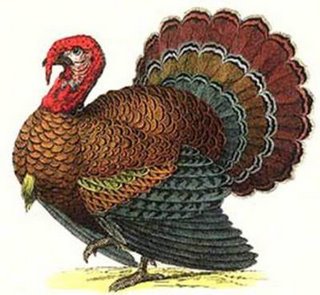
We have a meaningful - if not somewhat tormenting - tradition at my home on Thanksgiving Day. As the food hits the table and our stomachs are growling in anticipation, we pause for a few moments to allow each person to declare what they have been thankful for over the past year. Generally, it includes things such as appreciation for family, new children, a promotion or a newfound relationship. I can't remember a time when I've heard someone say they were thankful for the recent bond rally, the FOMC decision, or XYZ finally beating analyst estimates. It is interesting, in this age of long hours and long days; the most valuable things in life are still free. Have a wonderful Thanksgiving. . . .

Monday, November 19, 2012
Capital Gains: A Great Unlocking


[S]ome experts expect a substantial bump in tax collections in the short term as investors take a multitude of steps now that they would have taken in future years. After the top tax rate on capital gains rose to 28 percent from 20 percent at the end of 1986, federal receipts from such gains doubled to $52.9 billion in 1987, as sales surged at the end of the previous tax year.Maybe our much-maligned U.S. Congress deserves a little respect for cutting the deficit by cliff-hanging.
Thursday, November 15, 2012
Is Art the New Gold?
Christie's auction of contemporary art drew spirited bidding, much of it from foreign buyers said to be seeking a safe haven for their surplus wealth.
Buyers will be happy indeed if they fare as well as the seller of this Warhol:

Buyers will be happy indeed if they fare as well as the seller of this Warhol:
Six people fought for the Pop artist’s 1966 image of a sexy Marlon Brando leaning on his motorcycle’s handlebars, which was being sold by Donald L. Bryant Jr., a New York businessman. Mr. Bryant had bought the painting at Christie’s in 2003 for $5 million. On Wednesday it…ended up making $20.1 million or $23.7 million with fees.

Wednesday, November 14, 2012
Wealth and Worry
From The WSJ's Total Return blog:
Raising the bar. The threshold for "high net worth" is now $5 million.
Worry, worry, worry. A State Street Center for Applied Research survey finds, "investors don’t trust advisers, money managers don’t trust brokers and exchanges, regulators doubt their ability to police the markets, everyone thinks policymakers are incorrigible bumblers…."
Raising the bar. The threshold for "high net worth" is now $5 million.
Worry, worry, worry. A State Street Center for Applied Research survey finds, "investors don’t trust advisers, money managers don’t trust brokers and exchanges, regulators doubt their ability to police the markets, everyone thinks policymakers are incorrigible bumblers…."
Tuesday, November 13, 2012
Investment Ads From 1962
James Bond isn't what he was when Sean Connery debuted in "Doctor No." Neither is the world of investing. From the same 1962 issue of The New Yorker in which Geoffrey Hellman reported on his two-martini lunch with Ian Fleming, here are three ads.
Forecasting is tricky. Fifty years ago growth stocks had become the way to go. Even bond-heavy pension funds started buying them. But, then and now, picking stocks that actually grow isn't easy. Here, Shearson suggests it's like weather forecasting.

 "The stock market is a little like the Hellespont. Cursing and cajoling has no effect on it at all. Neither does propitiation. But the practical man who accepts its changeable nature and plans accordingly can be its master. Just as a general should read weather reports, an investor should read the financial pages of his newspaper, which are the weather reports of the stock market. *** The stock market is always subject to change without notice. That is its nature – and its fascination."

Forecasting is tricky. Fifty years ago growth stocks had become the way to go. Even bond-heavy pension funds started buying them. But, then and now, picking stocks that actually grow isn't easy. Here, Shearson suggests it's like weather forecasting.

To our knowledge this Merrill Lynch column is the only brokerage ad extant that begins with Xerxes crossing the Hellespont.
 "The stock market is a little like the Hellespont. Cursing and cajoling has no effect on it at all. Neither does propitiation. But the practical man who accepts its changeable nature and plans accordingly can be its master. Just as a general should read weather reports, an investor should read the financial pages of his newspaper, which are the weather reports of the stock market. *** The stock market is always subject to change without notice. That is its nature – and its fascination."
Over the past half century weather forecasting has improved by leaps and bounds. Stock-market forecasting, not so much.
The woman investor. Not a call center in sight when City ran this ad set in India. The ad was cutting edge in one respect: The American couple have his and hers investment accounts.
" His is a portfolio earmarked for growth – composed chiefly of aggressive, common stocks with promise of a dynamic future. Hers is a more conservative program, planned for stability and made up of both stocks and bonds."
In reality, both probably shared the same investment goals. But in 1962, only the man was expected to have enough earning power to make up for serious investment losses. The woman would have to type her way back up.
These days? Thanks to strategic asset allocation, we all invest like women.

Sunday, November 11, 2012
Ian Fleming, Wealth Manager
 1933: You're a well-schooled young Brit (Eton, Sandhurst), covering the Soviet Union for Reuters. The family wants you to get a real job.
Despite the Great Depression, Ian Fleming chose what we call wealth management:
I decided I ought to make some money, and went into the banking and stock-brokerage business– first with Cull & Company and then with Rowe & Pitman. Six years altogether, until the war came along. Those financial firms are tremendous clubs, and great fun, but I never could figure out what a sixty-fourth of a point was.

Like most English-speaking persons of note, Fleming was a Scot, grandson of Robert Fleming, founder of Flemings. A few years before its decline and acquisition by Chase in 2000, Robert Fleming & Co. operated in 44 countries in Asia, Eastern Europe, the Americas and Africa.
Monday, November 05, 2012
Where Most Pentamillionaires Don't Go . . . Yet
 Most pentamillionaires – more than two out of three – never use YouTube, according to the Spectrem survey mentioned in this WSJ story. Those with $5 million or more who do use the video site are likely to be under age 44.
Nevertheless, plenty of mere millionaires and mass-affluents must be users. So some advisers and planners have started prospecting on YouTube. Good idea?
That depends. A cursory survey suggests that YouTube's wealth-management videos range from surprisingly good to painfully embarrassing.
Best are the few that are professionally produced and content rich. Far more common are routine promotional videos, many virtually interchangeable and lacking the tone likely to appeal to the $5-million-and-up market A few are so amateurish they remind you of SNL parodies. You feel sorry for the poor souls who exposed themselves to public view.
Bottom line: Aim high and seek professional help if you seek to market yourself on YouTube. You probably can't produce something comparable to a Warren Buffett monologue or a TED lecture, but you'll be competing on the same playing field.
The Great Middle-Class Tax Hike
From today's Washington Post:
Unless Congress acts by the end of the year, more than 26 million households will for the first time face the AMT, which threatens to tack $3,700, on average, onto taxpayers’ bills for the current tax year. Because those people have never paid the AMT, they have no idea they are in its crosshairs . . . .
Thursday, November 01, 2012
Birth of the Estate Tax

Gotta love the Internet. Media Decoder at The New York Times asked which deceased magazines people missed, which led an old timer to mention The Saturday Evening Post, which led to another comment asserting that the Post was still alive, sort of.
Sure enough, besides a smattering of current articles, the Post web site offers selections from the magazine's archives. And not just the Norman-Rockwell-era archives. Remember, the publication was founded by Ben Franklin. From 1906 comes Swollen Fortunes, an appreciation of Teddy Roosevelt's eagerness to tax the One Percent. The article's author, David Graham Phillips, sums up Teddy's crusade:
What is our problem of concentrated wealth? Mr. Roosevelt has compacted the whole of it . . .
First – Enormous, swollen fortunes.
Second – The use of those fortunes to narrow independent opportunity, to monopolize industry, to raise prices and lower income, to manufacture a few thousand millions out of millions of men and a few billionaires out of the millionaires.
Third – The use of those fortunes to control political machinery and, so, both the making and the administration of the law. . . .
Any resemblance between the early 20th and early 21st centuries is, of course, purely coincidental.
Wednesday, October 24, 2012
“Rich” – Hard to Define But Always Interesting
You become "rich" when you have enough money. But how many dollars are enough?
A couple of million, carefully invested, might generate something like the median family income. But a median income won't allow you to live rich.
Ten million is sometimes termed "entry-level rich." All but the most exclusive trust companies or multifamily offices will let you in the door.
Thirty million, the threshold of Ultra High Net Worth, is probably about the level where you can start to live rich. Still, much depends on whether you're living it up in your Midwest hometown or a town house near Central Park.
The ambiguity of "rich" helps explain its popular appeal. If this blog wants to attract more readers, for example, we should use "rich" in the headlines of our posts. See Deborah Jacobs:
Superman Quits Day Job To Become Blogger; Three Things He (And Other New Bloggers) Need To Know
OK, we used "rich" in a headline. According to Jacobs, we'd be smart to use "Apple" next.
What do you think? Is Apple's new iPad Mini overpriced at $329?
A couple of million, carefully invested, might generate something like the median family income. But a median income won't allow you to live rich.
Ten million is sometimes termed "entry-level rich." All but the most exclusive trust companies or multifamily offices will let you in the door.
Thirty million, the threshold of Ultra High Net Worth, is probably about the level where you can start to live rich. Still, much depends on whether you're living it up in your Midwest hometown or a town house near Central Park.
The ambiguity of "rich" helps explain its popular appeal. If this blog wants to attract more readers, for example, we should use "rich" in the headlines of our posts. See Deborah Jacobs:
Superman Quits Day Job To Become Blogger; Three Things He (And Other New Bloggers) Need To Know
OK, we used "rich" in a headline. According to Jacobs, we'd be smart to use "Apple" next.
What do you think? Is Apple's new iPad Mini overpriced at $329?
Monday, October 22, 2012
1962: Three Ads and a Little History
Fifty years ago, the chauffeur wore gloves, even in Florida:

Also from 1962, a Chase nest egg ad I don't remember. If the ad didn't run much, perhaps it's because it could be entitled "The loneliness of the long-distance target shooter."

Finally, this 1962 ad, unrelated to banks and trust companies but relevant to our times. The United States Lines was battling the competition from transatlantic jet service. (They lost.) Featured is the family of John Frair, "returning from a military mission in Iran." At a guess, he had been training the army of the Shah, who had ruled Iran since the United States deposed Mosaddegh in 1953.
Douglas MacArthur II, shown at lower left in the ad, was the nephew of the Old Soldier. He was enjoying a posting in Belgium after a tough job as ambassador to Japan.

After leaving Belgium for assignments in Washington and Austria, MacArthur became the American ambassador to Iran in 1969, serving until 1972. Six years later, a revolution deposed the Shah and brought Ayatollah Ruhollah Khomeini back from exile.
The reverberations continue to be felt today.

Also from 1962, a Chase nest egg ad I don't remember. If the ad didn't run much, perhaps it's because it could be entitled "The loneliness of the long-distance target shooter."

Finally, this 1962 ad, unrelated to banks and trust companies but relevant to our times. The United States Lines was battling the competition from transatlantic jet service. (They lost.) Featured is the family of John Frair, "returning from a military mission in Iran." At a guess, he had been training the army of the Shah, who had ruled Iran since the United States deposed Mosaddegh in 1953.
Douglas MacArthur II, shown at lower left in the ad, was the nephew of the Old Soldier. He was enjoying a posting in Belgium after a tough job as ambassador to Japan.

After leaving Belgium for assignments in Washington and Austria, MacArthur became the American ambassador to Iran in 1969, serving until 1972. Six years later, a revolution deposed the Shah and brought Ayatollah Ruhollah Khomeini back from exile.
The reverberations continue to be felt today.
Friday, October 19, 2012
Elder Abuse for the Man Who Once Ran Salomon Brothers?
At 98, William Salomon still goes to the office provided him by Citigroup. (Sandy Weill acquired Salomon Brothers along with Travelers as he built his universal bank.)
With the office came a secretary who kept track of Mr. Salomon's appointments and paid his bills. Karen Febles is now accused of embezzling almost $2 million from her boss. Apparently the thefts began around 2008, the year that Salomon's wife of more than 70 years died.
Secretaries, it seems, aren't as faithful as they used to be. But then, Wall Street isn't what it used to be, as Mr. Salomon lamented in 1991:
“In my time, the customer was God and we would no more take advantage of him than we’d fly out the window."
With the office came a secretary who kept track of Mr. Salomon's appointments and paid his bills. Karen Febles is now accused of embezzling almost $2 million from her boss. Apparently the thefts began around 2008, the year that Salomon's wife of more than 70 years died.
Secretaries, it seems, aren't as faithful as they used to be. But then, Wall Street isn't what it used to be, as Mr. Salomon lamented in 1991:
“In my time, the customer was God and we would no more take advantage of him than we’d fly out the window."
Why the Market Tanked 25 Years Ago

Oldtimers remember "portfolio insurance." One of them, Floyd Norris, explains how an earlier generation of computers took the concept and ran with it, raising havoc on October 19th, 1987. With program trading, you needn't need an economic downturn to make the stock market crash.
After reading the article, you can resume worrying about today's high-frequency trading.
Thursday, October 18, 2012
Haves and Have Nots, Young Adult Division
Haves. Managers of family investments are Courting the Next Generation of the Rich. Business retention is the motive.
Success may be limited – sticking with your parents' investment people is seldom cool. The programs do provide some financial education. Also, participants welcome the opportunity to network with their peers.
Have nots. Two-thirds of college seniors in the class of 2011 graduated with student loan debt, averaging $26,000.
Debt loads varied widely from state to state. Three out of four graduates in New Hampshire owed an average of $32,440. In Utah a majority graduated debt free, and the minority owed an average of $17,227.

Success may be limited – sticking with your parents' investment people is seldom cool. The programs do provide some financial education. Also, participants welcome the opportunity to network with their peers.
Have nots. Two-thirds of college seniors in the class of 2011 graduated with student loan debt, averaging $26,000.
Debt loads varied widely from state to state. Three out of four graduates in New Hampshire owed an average of $32,440. In Utah a majority graduated debt free, and the minority owed an average of $17,227.

Got any good ideas for A) reducing the cost of college or B) increasing the supply of wealthy parents and grandparents?
Worried About High-Frequency Trading?
Maybe you should worry about the decline in high-frequency trading. Felix Salmon explains.
Did you realize that less ice for polar bears portends even faster trading? Give a listen to Salmon's audio essay for the BBC.
Did you realize that less ice for polar bears portends even faster trading? Give a listen to Salmon's audio essay for the BBC.
 |
| Photo via Wikimedia Commons |
Saturday, October 13, 2012
60% stocks, 40% bonds would have been better
The attempt by college endowments to imitate the investment strategies of Harvard and Yale have not done so well. Unconventional ideas lose their potency if they become conventional, evidently. Most shocking bit:
Harvard reported a 0.05 percent loss and a drop in its endowment of over $1 billion in the same period, even as a simple Standard & Poor’s 500-stock index fund gained about 5.5 percent. Harvard’s endowment decline is more than the entire endowments of roughly 90 percent of all colleges and universities.How much is enough for Harvard?
Thursday, October 11, 2012
A “Grossly Negligent and Reckless” Trustee
Jamie Dimon did not enjoy today's New York Times.
On the front page JPMorgan's CEO was greeted with a story on emerging criminal prosecutions, focused on traders associated with Morgan's infamous London Whale and his $6-billion trading loss.
The business section was just as depressing: JPMorgan Told to Pay $18 Million to a Trust.
The trust case concerns an oil heiress with lots of Exxon Mobil stock and the trustee's use of a complex investment product, designed to cash in on appreciated shares without triggering tax on capital gain.
Jamie Dimon is widely admired in the financial world, and rightly so. Yet he has to be wondering whether it's possible to build a financial institution that's too big to fail without creating one that's too big to manage.
The business section was just as depressing: JPMorgan Told to Pay $18 Million to a Trust.
The trust case concerns an oil heiress with lots of Exxon Mobil stock and the trustee's use of a complex investment product, designed to cash in on appreciated shares without triggering tax on capital gain.
Judge Linda G. Morrissey of the Tulsa County District Court in Oklahoma said that the bank had breached a series of fiduciary duties in its handling of the trust of Carolyn S. Burford, an oil heiress who died in 1996. The court also ordered JPMorgan to pay punitive damages, to be set at a later date, along with the trust’s legal fees.
Judge Morrissey concluded that JPMorgan had breached its fiduciary duty in 2000 when it sold what are known as variable prepaid forward contracts to the trust, a complex fee-rich product that the judge determined was unsuitable for the trust.
* * *
The judge found that JPMorgan, which ended up with the account after a series of bank mergers, had not properly explained the product to its client and had failed to disclose that the bank was benefiting from the transaction. The bank also breached its duty when it invested the proceeds of the contracts in its own investment products, which the judge said “amounted to double dipping” that was unreasonable.
Jamie Dimon is widely admired in the financial world, and rightly so. Yet he has to be wondering whether it's possible to build a financial institution that's too big to fail without creating one that's too big to manage.
Wednesday, October 10, 2012
Old Money Rap, New Money Rap
Who Says Trust Fund Babies Can't Rap? We raised the question six years ago, answering with a link to Tea Partay. That promotional video for Smirnoff, cheerfully mocking the Trust Fund Preppies of Greenwich and The Vineyard, went viral, attracting millions of hits.
Here's a rap video that's attracting hundreds of millions of hits – a dance-crazy salute to the New Money lifestyle in the land of Hyundai and Samsung.
From Korea, Psy's Gangnam Style.
Psy, a rapper in his mid-thirties, probably thought he was over the hill. Now he's a phenomenon, a worldwide celebrity. Gangnam, the area whose style he raps about, is a modern, flourishing district south of the river in Seoul. Someone has called it Seoul's Beverly Hills.
Why has Gangnam Style attracted hundreds of millions of viewers? Hard to explain, as Scott Adams acknowledges. This blogger's teenage grandson writes: "No mere mortal could have been this clever. I suggest we find the guy who made this and put him in charge of everything."
Korea's New Money is attracting private bankers and wealth managers galore. Citi has had a presence in Korea since the early 1980's. Now it's beefing up marketing efforts directed at Koreans with $1 million and up.
Here's a rap video that's attracting hundreds of millions of hits – a dance-crazy salute to the New Money lifestyle in the land of Hyundai and Samsung.
From Korea, Psy's Gangnam Style.
Psy, a rapper in his mid-thirties, probably thought he was over the hill. Now he's a phenomenon, a worldwide celebrity. Gangnam, the area whose style he raps about, is a modern, flourishing district south of the river in Seoul. Someone has called it Seoul's Beverly Hills.
Why has Gangnam Style attracted hundreds of millions of viewers? Hard to explain, as Scott Adams acknowledges. This blogger's teenage grandson writes: "No mere mortal could have been this clever. I suggest we find the guy who made this and put him in charge of everything."
 |
| Psy in Gangnam Style |
Monday, October 01, 2012
Next Year's Gift Tax Exclusion, $14,000
This year a gift of as much as $13,000 is excluded from federal gift tax. Next year, thanks to an inflation adjustment, the annual exclusion rises to $14,000.
Larger gifts require the donor to file a federal gift tax return. Always happens, right?
 Not exactly. Uncle Patrick just gave his favorite niece a $18,000 Elantra to drive off to college. Do you expect him to file a return and reduce his Unified Tax Credit by $5,000? (Oct. 3 Correction: Patrick would reduce what amounts to his transfer-tax exemption by $5,000. The UTC itself would shrink by a smaller amount.)
What about that $15,000 watch Aunt Mame just bought for her favorite nephew? Expect her to knock $2,000 off her lifetime exemption from gift tax?
Donors careless enough to die soon after gift-making may get snared in a tax audit. Otherwise, the exclusion seems based mostly on the honor system. Cheating, mostly unintentional, would be even more widespread were not payments of another person's tuition or medical expenses deemed nongifts.
Out of curiosity, your blogger checked out the annual gift exclusion of eighty years ago. It was $5,000. That was a lot of money in 1932 – over $82,000 in current dollars.
Shouldn't Uncle Patrick be able to buy his niece a Porsche without gift tax worries?

Larger gifts require the donor to file a federal gift tax return. Always happens, right?
 Not exactly. Uncle Patrick just gave his favorite niece a $18,000 Elantra to drive off to college. Do you expect him to file a return and reduce his Unified Tax Credit by $5,000? (Oct. 3 Correction: Patrick would reduce what amounts to his transfer-tax exemption by $5,000. The UTC itself would shrink by a smaller amount.)
What about that $15,000 watch Aunt Mame just bought for her favorite nephew? Expect her to knock $2,000 off her lifetime exemption from gift tax?
Donors careless enough to die soon after gift-making may get snared in a tax audit. Otherwise, the exclusion seems based mostly on the honor system. Cheating, mostly unintentional, would be even more widespread were not payments of another person's tuition or medical expenses deemed nongifts.
Out of curiosity, your blogger checked out the annual gift exclusion of eighty years ago. It was $5,000. That was a lot of money in 1932 – over $82,000 in current dollars.
Shouldn't Uncle Patrick be able to buy his niece a Porsche without gift tax worries?

Sunday, September 30, 2012
My Memory of “Punch”
I once met Punch Sulzberger, the long-time publisher of The New York Times. It was no big deal. Here's the comment I posted to his obituary.
After getting out the army in the summer of 1956, I worked in market research. One assignment was to call on New York business leaders and ask them how our airline client could improve its printed flight schedules.
Business big-shots were more accessible in those days, but I struck out at The New York Times. "You cannot go up to the elder Mr. Sulzberger's office," a gatekeeper told me. He gestured down a hall. "Why don't you talk with young Mr. Sulzberger."
I headed toward the back of the ground floor. The office of young Mr. Sulzberger looked like a small storeroom. He received me graciously, answered my questions, and impressed me as a level-headed sort.
In 1963, when fate propelled him into the publisher's position, I had a hunch he'd do better than people expected.
Always nice to be proved right.
In Two Years, $20 Billion in Investment Fraud!
These are tough times for investors in need of income. One result, a surge in investment fraud and Ponzi schemes. Federal attorneys are fighting back with regional "investment fraud summits."
Nationwide, federal prosecutors looking at investment cases from the last two years identified 500 prosecutions that targeted 800 defendants and involved more than $20 billion in fraud, according to Connecticut U.S. Attorney David Fein. For two recent examples from Connecticut, see here and here.
Income investors who avoid Ponzi schemes by putting their money in dividend-paying stocks aren't necessarily safe. As this NY Times article notes, "the Federal Reserve and other central banks have been flooding the planet with money." A lot of that cash presumably has been sloshing into the stock market. How deep will the Dow dip when it sloshes out again?
Conscientious investment advisers can't always make their clients rich, but often they can keep them from becoming poor.
Nationwide, federal prosecutors looking at investment cases from the last two years identified 500 prosecutions that targeted 800 defendants and involved more than $20 billion in fraud, according to Connecticut U.S. Attorney David Fein. For two recent examples from Connecticut, see here and here.
Income investors who avoid Ponzi schemes by putting their money in dividend-paying stocks aren't necessarily safe. As this NY Times article notes, "the Federal Reserve and other central banks have been flooding the planet with money." A lot of that cash presumably has been sloshing into the stock market. How deep will the Dow dip when it sloshes out again?
Conscientious investment advisers can't always make their clients rich, but often they can keep them from becoming poor.
A 28% Solution
In The New York Times, University of Chicago professor Richard Thaler proposes tax reform from the top down. He'd tax income exceeding $1 million – including dividends and capital gain – at 28 percent, with no deductions. He also proposes dropping the federal estate tax rate to 28 percent, although he would reduce the current exemption as well.
Could taxes really be reformed starting at the top? In the midst of a presidential election featuring a rich guy running against a richer guy, with billionaires throwing money around trying to influence the result, who can say what's possible?
Could taxes really be reformed starting at the top? In the midst of a presidential election featuring a rich guy running against a richer guy, with billionaires throwing money around trying to influence the result, who can say what's possible?
Friday, September 28, 2012
Intentionally Defective Grantor Trust Makes Headlines!
It takes a celebrity – or in this case, a politician – to put sophisticated trust planning in the spotlight. Estate planners, give three cheers for Mitt Romney's "I Dig It" trust.
If the next wave of tax reform axes I Dig It trusts, would the crackdown really "put an end to much of estate planning as we know it"?
If the next wave of tax reform axes I Dig It trusts, would the crackdown really "put an end to much of estate planning as we know it"?
Tuesday, September 25, 2012
Broadway's Biggest Mystery
When clients find equities and bonds boring, advisers may suggest spicing things up with alternative investments: private equity, vintage Aston Martins, one-eighth of a race horse. How about backing a Broadway show?
Amazingly, The New York Times observes, otherwise sane people may think that's a cool idea.
 The Times article chronicles the troubled effort to bring"Rebecca," a musical that has enjoyed success in Vienna and elsewhere in Europe, to The Big Apple. A scheduled opening last April failed for lack of funding. Miraculously, Paul Abrams, a consultant working out of South Africa, came to the rescue with the promise of $4.5 million. That must have made the show's other investors feel much better.
They don't feel better now. Just before coming up with the money, Mr. Abrams suddenly died.
Will his estate honor his commitment? Probably not. Turns out there's no evidence of Paul Abram's death and, so far, little evidence of his existence.
Maybe stocks and bonds aren't so dull.
Amazingly, The New York Times observes, otherwise sane people may think that's a cool idea.
The business of Broadway has always been cloaked in mystery. Most of its 40 theaters are run by three private organizations that operate out of public view. Producers keep deal-making under wraps. The biggest mystery of all is why so many sophisticated investors go along with business-as-usual on Broadway when few shows turn a profit.

They don't feel better now. Just before coming up with the money, Mr. Abrams suddenly died.
Will his estate honor his commitment? Probably not. Turns out there's no evidence of Paul Abram's death and, so far, little evidence of his existence.
Maybe stocks and bonds aren't so dull.
Private Banks For Name Droppers
Exclusivity. Social status. Along with quality and "overall client experience," those are the criteria Luxury Institute uses to rank the year's top private bank brands. This year's winner, determined by a survey of investors with at least $5 million: Brown Brothers Harriman, followed by Boston Private Bank. Neuberger Berman Private Asset Management and Bessemer Trust.
A year ago different names possessed the snob appeal: Atlantic Trust, Glen Mede Trust and Rockefeller Wealth Management.
(When I was very young, my father used to stop by the Rockefeller office to drop off a bookbinding job or pick up a check. The notion that a family had an office impressed me immensely. In those days the place must have been truly exclusive – you probably had to marry into it.)
These days, the exclusivity of Rockefeller, Bessemer and other former family offices resides in the eye of the beholder. Marketingwise, a little snob appeal probably can't hurt. Or could perceived exclusivity impede growth?
Despite their prestige, fiduciary-style wealth managers aren't exactly cornering the high-net-worth market."Morgan Stanley, Merrill Lynch and Wells Fargo are the top three primary wealth managers to the wealthy," Luxury Institute noted last year. More than one third of the multimillionaires surveyed said a full-service broker was their primary adviser.
A year ago different names possessed the snob appeal: Atlantic Trust, Glen Mede Trust and Rockefeller Wealth Management.
(When I was very young, my father used to stop by the Rockefeller office to drop off a bookbinding job or pick up a check. The notion that a family had an office impressed me immensely. In those days the place must have been truly exclusive – you probably had to marry into it.)
These days, the exclusivity of Rockefeller, Bessemer and other former family offices resides in the eye of the beholder. Marketingwise, a little snob appeal probably can't hurt. Or could perceived exclusivity impede growth?
Despite their prestige, fiduciary-style wealth managers aren't exactly cornering the high-net-worth market."Morgan Stanley, Merrill Lynch and Wells Fargo are the top three primary wealth managers to the wealthy," Luxury Institute noted last year. More than one third of the multimillionaires surveyed said a full-service broker was their primary adviser.
Sunday, September 23, 2012
"The Lifetime Trust"
“ [T]he lifetime trust is an excellent tool to reduce creditor, divorce and death tax concerns while positioning an inheritance to be available to provide for one's heirs for the rest of their lives.”
Unclaimed Inheritances
Kudos to Cleveland's Plain Dealer for setting up a searchable database of unclaimed inheritances in Cuyahoga County. Wealth managers in other areas where such data are hard to access might burnish their brand by sponsoring similar sites..
Wednesday, September 19, 2012
Forget the Rich. Look For “Core Millionaires”
For tips on gaining wealth-management business by coddling folks with $25 million or more, see How Private Banks Are Luring the Super-Rich. Better yet, take a hint from the article and lower your sights:
So-called 'Core Millionaires', with assets of between $1 million and $10 million, generate investment revenue margins on average two to three times higher than their wealthier counterparts, making greater use of more profitable banking and lending products, a survey by McKinsey estimates.
Subscribe to:
Posts (Atom)

 Posts
Posts


