Saturday, March 29, 2014

"Traust!" Or As We Say Today, "Trust"

Photo: Alex Lentati
In 1014 Vikings ruled England. The British Museum marks the anniversary with a blockbuster exhibition, Vikings: Life and Legend, featuring the remains of a 121-foot Viking ship (imagine a low-slung superyacht with lots of oars).

One of the most reassuring words the English could hear from a Viking invader was "traust." It indicated the giant on one's doorstep did not have rape and pillage on his to-do list. He was offering protection and support.

"Traust" passed into English as "trust." By the early 1400s it gained a legal meaning: "confidence placed in one who holds or enjoys the use of property entrusted to him by its legal owner."

Trust Acronyms. Enough Already?

In his Wealth Matters column Paul Sullivan delves into the mysterious world of trust acronyms and trips only once, referring to CRATs as CLATs.

What do you say, tax planners? Time for less argot, more clarity?

3/31 Update: Sent Sullivan an email pointing out he hadn't quite made it unscathed through the thickets of trust acronyms. This morning he thanked me for my note, which may have been the friendliest he got.

 "As you may recall from your years of writing about trusts, get one thing wrong and a swarm of t&e attorneys attacks you like a hive of angry bees."

Thursday, March 27, 2014

Can You Spot a Trust Company?

As they liked to say back in the age of print, you can't judge a book by its cover.

Optima Bank and Trust, despite its name, offers no trustee or investment services.

Glenmede, despite its ad logo, is of course a trust company.

Takeaway: Use "trust" in your name if you wish your personal banking services to sound upscale. Eschew "trust" if you want to be seen as a forward-looking wealth manager.

Hey, we don't make the marketing rules. We just report them.

Sunday, March 23, 2014

Money Makes the World Go 'Round

As investing grows more global, so does the flow of money. International migrants sent $529 billion in remittances back to their home countries in 2012, according to the World Bank.

Pew Research has turned the World Bank data into an interactive world map. The clip below shows where remittances flow from the U.S.

Friday, March 21, 2014

How Can Bankers to the Rich Earn Their Fees?

Top banks and trust companies charge real money for wealth management these days, according to the WSJ.
Annual fee for managing $5 million: $46,500
For managing $20 $30 million: $201,000
To earn such generous compensation, says the Journal, a wealth manager needs to do more than allocate assets. No surprise there. More than three decades ago, when Daniel Davison ran US Trust, the bank depicted the breadth of its services by commissioning Winston Churchill's granddaughter to create a sculpture of a trust officer walking a client's dog.

Though wire houses and banks still dominate the high net worth market, the WSJ graphic shows independent advisers are nibbling voraciously at their business.


Corrected 3/26

Thursday, March 20, 2014

Has Investing Reached a Fork in the Road?

Within living memory, investing has evolved in three stages:

 SS
 Stock selection was the key after World War II. Fifty years ago Shearson boasted of its stock-picking
task force: "Last year they traveled more than 350,000 miles, studied more than 10,400 annual reports and held more than 5,400 interviews with company executives."

Then efficient market theory came along. All that analytical work, it seemed, was pointless. On average, stock pickers produced only average results. And that was before commissions.

AA
Asset Allocation reflected the finding that investment returns depended mainly on how funds were deployed among different asset classes. Selection of  specific securities was secondary. Thanks to index funds, followed by similar ETFs, asset allocation became simple, efficient … and deadly dull.

Efforts to spice up AA by creating dozens of asset sub-classes ("I'm tweaking my Chinese midcaps and dumping Irish micros.") didn't help much.

II 
Irregular Investments – less alliteratively, alternative investments – avoid the shortcomings of both SS and AA. Markets are less efficient in the II world, and private equity deals appeal to investors who want to feel they've entered the big leagues.

"Hedge funds, private equity, and private debt are being extolled as some of the best ideas for wealthy investors' portfolios in 2014," according to this Barron's cover story. (I gained access; results for other nonsubscribers may vary.) As shown here, Goldman Sachs is putting 14% of clients' money into private equity. GenSpring puts a full quarter of client assets into hedge funds.
 
As an investment method for the 1%, irregular or alternative assets are winners. Clients feel special. Wealth managers harvest hefty fees. But for lesser investors, a competing approach is gaining ground.

CC
Cost Control. Even if most funds and portfolios typically produce more or less average returns, investors can gain a sure-fire edge by lowering their costs. Jack Bogle, of Vanguard fame, has proselytized for cost control for years. His latest salvo: The Arithmetic of “All-In” Investment Expenses.

Even one-percenters can be tightwads when confronted by today's investment fees. Stuart Lucas, for example, believes investors should focus on what they net after expenses and taxes.
Stuart E. Lucas, chairman of Wealth Strategist Partners, which manages about $1 billion for a small number of wealthy families, analyzed state and federal taxes along with management fees to argue that if 50 percent of your return went to someone else, then you should reconsider the investment.
Index funds and most mutual funds are under the 50 percent line. Hedge funds are always above it for a taxpaying individual. Private equity investments are on the line.
 Will pricey Irregular Investments prevail as hedge funds seek to expand their customer base beyond the 1%?  Or will the 1% decide hedge funds are so yesterday and boost their returns by cutting expenses? We'll be watching.

Monday, March 17, 2014

Can You Make a Valid Will When You're All Thumbs?

You probably can, especially if you're texting in a state that's adopted The Uniform Probate Code.

Texting Your Will.

Saturday, March 15, 2014

Your Wealth Is Your Health

The old saying, "your health is your wealth," needs rearranging. And Star Trekkers should learn  to say,"Prosper and live long."

Where Incomes Are Higher, Life Spans Are Longer.

How will longevity reshape wealth management and estate planning?

Thursday, March 13, 2014

Boomer Inheritance Boom Fizzles, But Wait Until 2031!

Some wealthy parents of Boomers are still around, and those that aren't seem to have favored philanthropy – or dynasty trusts – rather than outright transfers of wealth to the next generation. See The New York Times: 
The top 1 percent of households owns about 35 percent of American wealth, more than the entire bottom 90 percent does. But at least at the moment, growing inequality has not resulted in a big boom in inheritances. Since the 1980s, the value of inherited wealth has only drifted upward slightly. In fact, wealth transfers as a proportion of net worth have fallen, to 19 percent in 2007 from 29 percent in 1989.
Maybe the Boomers' heirs, the Gen X and Gen Y crowd, will be luckier. Starting in 2013, the consulting firm Accenture forecasts, "10 percent of the country’s total wealth will change hands every five years through inheritances, estates, gifts and the like."

What do you think? Will Boomers conserve and pass along the family wealth? Or will they joyfully spend the kids' inheritances?

Friday, March 07, 2014

Ads From the Growth Stock Era

"Stocks yield more than bonds because stocks are riskier." That folk wisdom prevailed for the first half of the twentieth century, wavering only in 1929. You know what happened then.

By 1964, however,  the new era of Growth Stocks had kept stock yields lower than bond yields for half a decade. Chase Manhattan's nest egg ads responded. No more beating around the bush with loss leaders like custody. This March 1964 ad makes a simple pitch for investment advisory service.

Personal note: The old pumper is from my old home town.


Also from March 1964, this ad from a Greenwich, Connecticut trust company. Putnam was a classy wealth manager in its day. Bank of New York Mellon acquired Putnam in the late 1990s.


In 1964, the Putnam ad tells us,  the most expensive residential property in Greenwich was priced at $450,000. Today the most expensive is the waterfront estate we showed you here. Then offered at $190 million, the 50-acre waterfront property is now available for $130 million.

A bonus March 1664 ad: This Irving Trust message didn't enable Irving to succeed as a major commercial bank, but it sure looked good.

Wednesday, March 05, 2014

Could GRATs Lose Their Tax Magic?

Estimated wealth Sheldon Edelson has given his heirs using more than 30 GRATs
Estimated federal gift tax Edelson has saved by using GRATs
Grantor Retained Annuity Trusts have certainly drawn Bloomberg's attention. (Check out the video.) And GRATs again receive attention in the President's budget proposal, as Deborah Jacobs reports. Unlike the pro forma call for a return to harsher estate taxation, the proposed crackdown on GRATs, Crummey trusts and dynasty trusts shouldn't be dismissed, Jacobs believes.
Don’t expect thoughtful estate tax reform — we’re talking congressional horsetrading, perhaps done incrementally. (Heads up: watch those transportation funding bills.)
Richard Covey, the father of high-speed GRATs, estimates his brainchild has saved donors more than $100 billion in taxes since 2000. Could the end be nigh?

Monday, March 03, 2014

Undue Influence in Paradise

Be sure to click through to the Daily Mail article Gerry Beyer spotlights here. You'll probably see the fictionalized version on Season Seven of Downton Abbey.

Friday, February 28, 2014

How Bipartisan Tax Reform Went Bye-Bye

A year ago the near-impossible task of tax reform seemed to gain a bit of traction. Then all politics broke loose.

"The saddest part," writes Dana Milbank, "is that it probably didn’t have to be this way. There is a bipartisan appetite for something very much like what Camp proposed — coupling lower tax rates with an end to tax loopholes and giveaways to the well-connected, all without reducing the progressivity of the tax code."

East Is East and West Is West. Art Is Art and Money is . . .

Image via Newyorker.com
Remember the case of the dropped million-dollar vase? The vase wasn't worth anything like a million. And dropping it was sort of the theme of the exhibition. Ben Mauk explains.

Takeaway: In an age when "even gallery employees cannot distinguish between art and garbage," contemporary art may not be the ideal alternative investment.

Thursday, February 27, 2014

The Tax Reform Act of 2014

That's the working title of the Camp tax reform proposal, even though legislation has yet to be marked up.  A few highlights for high-income taxpayers gleaned from Tax Notes:

• The mortgage interest deduction is retained, but capped at $500,000 for new mortgages.  Seems fair.
• The deduction for state and local taxes is eliminated, because it is a tax subsidy to the big government states, at the expense of the small government states. Sounds great, very fair, even though I live in super-high tax Connecticut.
• The charitable deduction is retained, but only to the extent the donation exceeds 2% of AGI. I would repeal this deduction, but this is a good start.
• The special maximum tax rates for long term capital gains are eliminated, replaced by a 40% exclusion from income.  The 3.8% Obamacare surtax on net investment income is, according to JCT, not affected by this change.  Does that mean the exclusion is added back to AGI for high-income taxpayers for calculating that tax?
• There are two individual brackets, 10% and 25%, plus a 10% "surtax" that applies at the income levels that have a 39.6% tax rate now.  Why not just have a 35% bracket and be done with it? Because the definition of what's taxable for the surtax is different from "taxable income."
• In a far-reaching change, tax-free muni bond interest would be subject to the 10% surtax.  So, the implicit subsidy would be reduced, that tax benefit is capped at 25%.   President Obama has already proposed capping the benefit at 28%.  Still, there's going to be furious pushback on this one, because it will increase costs for new state and local borrowing. Which is the right result--maybe they'll do less of it.
• No changes at all to estate and gift taxes.

I like the Camp proposal more than I expected.  I hope that it's analogous to the Kemp-Roth Tax Act proposal that Carter rejected and Reagan campaigned for, which led to  the Economic Recovery Tax Act in 1981.  Because we really could use another economic recovery right now.

Wednesday, February 26, 2014

Are Women Investors More Timid?

Via Felix Salmon come these charts. Woman appear more risk averse when they're young. But women and men accept essentially the same risk level once they reach age 50 or build a net worth of $1 million or more.

Is Harvard Too Rich For Charity?

Kenneth C. Griffin, billionaire hedger, has pledged $150 million to Harvard, mostly for scholarships. Griffin's gift is the largest the university has ever received.

Does it make sense to give that kind of money to Harvard, an institution already half as rich as Warren Buffett?

No, opines this Bloomberg Businessweek columnist. He points out that Harvard's existing endowment could pay every student's tuition, room and board – about $60,000 – for many, many years.

Tuition, however, does not begin to measure what Harvard and other Ivy League schools spend on their students. According to these estimates, Harvard's annual expenditure per student exceeds what the average student pays by over $50,000. At Yale, over $95,000.

In a world where hardship and poverty remain widespread, donations to wealthy organizations inevitably draw criticism. (When I read that Harvard was naming its admissions office after Griffin, I thought they were kidding. Apparently not.)

Griffin Court, Chicago Art Institute
Previously, Griffin's most noted philanthropy was $19 million toward the magnificent new wing of The Chicago Art Institute. Some believe the money would have been better spent on efforts to reduce Chicago's murders and rampant drug addiction. Others assert that a splendid building, housing great art, enlightens and elevates the residents of the Second City more than another dozen anti-poverty programs. By most accounts, Chicago folks do like the new wing.

Tuesday, February 25, 2014

Tax Reform Breakthrough?

The Democrat heading the Senate Finance Committee has announced that the Congressional Budget Office is now willing to "actually score pro-growth tax reform as generating revenue."

The Republican heading the Ways and Means Committee has introduced a tax reform plan, three years in the making, that would reduce income tax rates to just two, 10% and 25%, for almost all taxpayers. The plan aspires to revenue neutrality.

In theory, tax reform could awaken from its coma.
Recognizing that government can be a beneficiary from pro-growth tax reform makes it possible for Mr. Obama to get more revenues without Republicans having to vote for a tax hike. This is the glue that makes a bipartisan deal possible. 
In practice – well, you try to design a revenue-neutral plan that cuts income tax rates to 10% and 25%. You're eliminating the deduction for mortgage interest? Lots of luck with that!

Sunday, February 23, 2014

“The Talent To Prosper"

In Legacies Can Last For Centuries we linked to an interview with Gregory Clark. In his New York Times column Clark offers a fuller introduction to his views:
The fortunes of high-status families inexorably fall, and those of low-status families rise, toward the average — what social scientists call “regression to the mean” — but the process can take 10 to 15 generations (300 to 450 years), much longer than most social scientists have estimated in the past..
Why is membership in the upper and lower classes so lasting? High social status seems to depend on certain traits.
In modern meritocratic societies, success still depends on individual effort. Our findings suggest, however, that the compulsion to strive, the talent to prosper and the ability to overcome failure are strongly inherited.
"The talent to prosper." Interesting term. How would you define it? A penchant for thrift? A head for business? The ability to delay gratification? The good sense to follow the advice of a faithful trust officer?

The Times accompanied Clark's column with this spot-on illustration by Javier Jaén: the evolution of the Upper Crust.

Thursday, February 20, 2014

Philip Seymour Hoffman's Unrevised Will

Photo: Wikimedia Commons
The actor didn't didn't intend to die of a drug overdose. Updating his will was probably the farthest thing from Philip Seymour Hoffman's mind.  Deborah Jacobs places blame on the lawyer who should have included boilerplate covering children born after the will was signed.

Because Hoffman wasn't married to the mother of his children, Jacobs points out, estate taxes will be heavy. Ordinary citizens may not see a problem. Most families can scrape by on $20 million after taxes.

Tuesday, February 18, 2014

The Girl Who Married a Trust Breaker

Mavis Gallant died today in Paris at age 91. Over the years she published one hundred fourteen short stories in The New Yorker. The magazine has put this tale, published in 1956, on public view.

Gallant's story of a fading old Brit and his young second wife, living precariously in Italy, evokes the end of empire. (1956, you'll remember, was the year Egypt nationalized the Suez Canal.)

"The joke of it is," the story begins, "there's nothing to leave. Nothing at all." Thus the young wife learns that the child she has borne the old Brit will have no inheritance.
It had not been Stella’s ambition to marry money. ••• [T]he trouble was that during their courtship Henry had seduced her with talk of money. He talked stocks, shares, and Rhodesian Electric. He talked South Africa, and how it was the only sound place left for investment in the world. He spoke of the family trust and of how he had broken it years before, and what a good life this had given him. Stella had turned to him her round kitten face, with the faintly stupid kitten eyes, and had listened entranced, picturing Henry with the trust in his hands, breaking it in two.

Monday, February 17, 2014

Beware Double Y-Axes

As we've warned you (Lies, Damned Lies … and Charts) sometimes seeing shouldn't be believing. Here The Atlantic zings the chart below for using double y-axes. Great way to make mountains out of mole hills.

Wednesday, February 12, 2014

Stock Trading: The Race to Zero

Between the NYSE data center in Mahwah, N.J., and the Nasdaq center 35 miles away, lasers are now deployed strategically atop office and apartment buildings. They're the first wave of a network patterned after U.S. Air Force aerial communications. As the WSJ explains, it's all about high-frequency trading:
It is the latest salvo in the "race to zero," traders' term for their efforts to whittle away the difference between the speed their orders travel at and the speed of light. Zero, the point at which that difference would disappear, has become a kind of holy grail to computerized traders, for whom nanoseconds—billionths of a second—can spell the difference between profit and loss in their algorithm-driven trades.
For a briefing on how high-frequency trading came to be, see the Deal Professor. Before 2007 stocks generally traded on The New York Stock Exchange or Nasdaq. Then the SEC changed the trading rules. Current result: 13 public stock exchanges and 45 "dark pools" where most trades for long-term investors are made.

 The race to zero must be lucrative, but couldn't grown men and their algorithms find more constructive work?

Tuesday, February 11, 2014

Wealth Trends From the Times

The New York Times' latest Wealth section offers more substance than most. A few gleanings:

The aging of inheritance. Seventy years ago Merrill Anderson published its first newsletter. Back then, estate planning articles assumed readers well might die before their children were grown. These days, The Times points out, the children may be ready to retire before they inherit from their parents. 

Unchanged over the years is the behavior of those receiving sudden wealth. Some feel a sense of stewardship; others don't. Some find it hard to break sentimental ties to an inherited home or large block of stock. 

The proliferation of family foundations. "There are now over 40,000 family foundations in the United States, making grants totaling more than $21.3 billion a year," The Times reports, "up from about 3,200 family foundations doling out $6.8 billion in 2001…" Few are big-league foundations; sixty percent have assets of less than $1 million.

The absurdity of top incomes. In 2012, "the average household in the bottom 90 percent of the income distribution earned about $30,997. For the average household in the top 1 percent, the figure is $1,264,065…." As for the top 0.1 percent, well, look at the chart.
Late in the article, The Times acknowledges that really high incomes seldom persist. Most one-percenters can't maintain their privileged position for five years.

What Tax Cheats Cost Us

Charles Kenny at BloombergBusinessweek:
[C]lose to 15 percent of federal taxes owed…are never paid—about $385 billion a year. If that $385 billion were collected, it could fund universal pre-K for 4-year-olds, double the size of both theEarned Income Tax Credit and the U.S. Air Force budget, and reduce the deficit by more than a quarter—all at the same time.

Sunday, February 09, 2014

Family Legacies Can Last For Centuries

Samuel Pepys
"Shirtsleeves to shirtsleeves in three generations" doesn't tell the whole story. In The Son Also Rises Gregory Clark asserts that family prosperity – using multiple measures including education, occupation and access to wealth – can last for three or four centuries.

One poster child for Clark's theory: Samuel Pepys, seventeenth-century British navy bureaucrat and author of the best diary* I ever read.
Pepys has always been a rare surname, flirting with extinction. In 1880 there were only thirty-seven Pepyses in England, and by 2002 they were down to eighteen. Seventeenth-century parish records of baptisms and marriages suggest there were only about forty Pepyses living art one time even then. The Pepyses emerged from obscurity in 1496 when one of them enrolled at Cambridge University, and they have prospered ever since. Since 1496, at least fifty-eight Pepyses have enrolled at Oxford or Cambridge, most recently in 1995. For an every surname of this population size, the expected number of enrollees would be two or three.
In Clark's view money isn't everything. Even if one generation drifts from wealth to "shirtsleeves" – deserting family for social work in Africa or beachcombing in the Caribbean – the next is likely to return to prosperity, perhaps helped through college by a doting grandmother.

Or by a trust fund left by grandfather.

* The Pepys diary online is annotated with links that help London in the 1600s come alive for the modern reader. I keep meaning to reread the diary. If you haven't, you should.

Saturday, February 08, 2014

Wealth Managers, Beware of Hackers

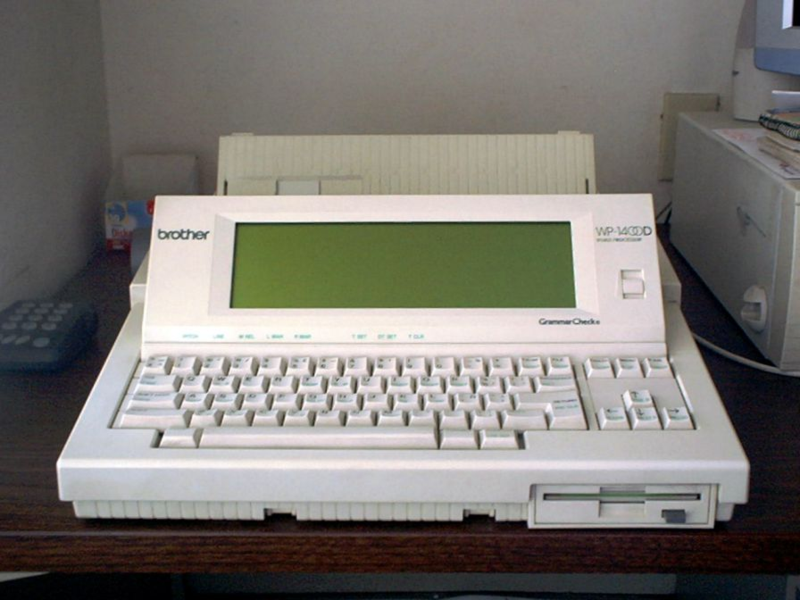
“The Nigerian prince email swindle, in which a supposed royal offers riches in exchange for a bank account number, is to today’s phishing scams what a Brother word processor from the 1980s is to a MacBook.”
Paul Sullivan in The New Hork Times warns that bad people have become highly skilled at draining money from the accounts of wealth managers' clients.
A security executive at a trust company told of a hacker who got creative in trying to fool the firm. The executive, who requested anonymity, said the firm received an email from a client’s account asking that $137,000 be wired to Italy to buy some art. He said this client was part of a large family that traveled frequently, so the request was not odd on its face. But he said the family had put a procedure in place in which no wires went out without a call being made to the person requesting the money.
 One security tip for investors that hadn't occurred to me: Don't keep documents bearing your signature in your email.

Tuesday, February 04, 2014

Harold Simmons' 44-Page All-To-Wife Will

Why Harold Simmons' widow– sole beneficiary and executor of his will – wanted the will and probate proceedings kept secret isn't apparent now that a redacted version of the will has been made public.

Simmons had already provided for his daughters. Most of the 44-page will deals with how the estate was to be used for charitable purposes (no politics, Simmons instructed) in the event his wife predeceased him.

Sunday, February 02, 2014

Can a Fallen Real Estate Prince Rise Again?

Heir to a real estate dynasty, Kent Swig married well, lived well  and amassed billions, buying up buildings in New York's financial district after the 9/11 terrorist attacks depressed prices. Then came the real estate bust and the Great Recession. The New York Times details Swig's rise and fall in With Fortune Fading, a 1% Divorce.

His boom-to-bust story may have a second act.. Swig has avoided bankruptcy and managed to pay down some debt. One reason: "his ability to access Swig family trusts that are protected from creditors." 

Sometimes asset protection trusts really do make a difference.

Wednesday, January 29, 2014

Should the Probate of Harold Simmons' Will Be Secret?

Harold Simmons, remembered as a corporate raider, major philanthropist and the swift-boater of John Kerry, was familiar with trusts – two he established for his daughters led to a bitter legal dispute. If Simmons had wanted the estate privacy afforded by a revocable trust, presumably he would have used one in his estate planning. He didn't, but his widow seems to wish he had. She has asked that his will and probate records be sealed.

Wills go on public record for good reason, as explained here. In today's hearing, the probate judge seemed willing to redact some details but indicated that Simmons' will would be made public.

Sunday, January 26, 2014

The New Wealth Wants More Than One

Sometimes one is not enough.

Here's a Rolls spokesman describing the typical buyer of the Wraith, the most powerful Rolls Royce ever crafted:
“It’s no longer the Wall Street or real estate guys buying these in the U.S.,” said James Warren, the company’s communications manager for Britain and Scandinavia. “It’s the sickeningly clever and very wealthy, and really cool, pioneering dot-com guys, blokes in their late 20s and early 30s." 
Rolls Royce Wraith
Mr. Warren said that some of these early buyers were already talking about buying a second Rolls in the form of the more traditional limo-style Phantom or Ghost models. “They just love jumping into the Wraith at the house in Malibu for a weekend blast,” he said. “But they wouldn’t mind sitting in the Ghost during the week and tapping away at the laptop.”
Coincidentally, another Sunday Times story reports that the room required next to the kitchen in the latest superhomes may be…a second kitchen.

The trend is good wealth management news: Folks with a second Rolls or a second kitchen should welcome a second investment adviser.

Saturday, January 25, 2014

Homes of the Infamous Formerly Rich

In my Connecticut days, Round Hill Road in Greenwich was an admirable address. Today, according to one Greenwich realtor, not so much.
One of the gaudy estates is owned by a hedge fund kingpin now residing in prison; others belong to a real estate investor just coming out of prison and an investment adviser who steered his clients and their billions to Bernard L. Madoff. Then, to cap it off, a guy in an 8,000-square-foot mansion is charged with crushing his wife’s skull in with a baseball bat.

This is “Rogues Hill Road,” or so Mr. Fountain has called this 3.5-mile stretch of asphalt. “All these aspirational schnooks came out here thinking that they had really made it,” said Mr. Fountain, a real estate broker, blogger and lifelong Greenwich resident. “But then the tide went out and what you are left with is a bunch of crooks.”
More than 40 Greenwich homes are on the market for at least $10 million. Make an unreasonable offer.

Friday, January 24, 2014

A Mysterious Chase Nest Egg Ad

Watching Rafa trounce Federer at the Australian Open reminded me of this 1963 Chase Manhattan ad, one that I've been puzzling over since last summer.

"Saturday afternoon with the young fry" is the photo caption. A young boy stands on what appears to be a private tennis court.  He is poised to volley at net. But we see no net, no other players, no tennis instructor. Just the boy, alone on a tennis court without a net.

No wonder Dad isn't paying attention. His chair is turned slightly away, next to a small table on which sits a pitcher. Is he sharing the contents (fruity and perhaps rum based?) with someone to the right of the picture frame? Who? The boy's mother? The tennis instructor? A girl friend? We have no clue.

What do you think is going on?


Tuesday, January 21, 2014

Coming Clean on Bypass Trusts

Over the years your humble blogger wrote enough newsletter articles on bypass trusts to fill a dumpster. Don't waste your federal estate tax exemption! Prevent unnecessary estate tax at the later death of your spouse!

Rarely did clients encourage us to mention the income-tax downside: Although assets left outright receive a stepped-up basis at death. assets left in trust do not. If Grandpa dies when his Apple shares, purchased at $10 each, are worth $550, Grandma can sell at that price or less without realizing taxable gain. Only additional growth would be taxable. If the shares pass in trust, everything over $10 a share will be taxable gain.

When the Bush tax cuts lowered the top tax rate on capital gain to 15%, the income tax drawback of bypass trusts seemed less important. But this year the top federal income tax rate on capital gain is back up, approaching 25%. (And, of course, the effective tax rate on gain often exceeds the listed rate.)

Fortunately, new estate tax rules allow Grandma to make use of Grandpa's unused estate-tax exemption. Bypass trusts have become unnecessary. Or have they?

According to Deborah Jacob's dispatch from "the Super Bowl of estate planning," drafters of wills and trusts have faced up to the potential income-tax cost of bypass trusts. Nevertheless, for a variety of reasons they think the trusts still have a future.
•
Caution: Don't take the title of Jacob's column, "Estate Planning for the 99%," literally. Candidates for bypass trusts are the 1% (the 1% threshold is around six to eight million, depending on who you ask) or at worst the top 2%. Remember, only 5% of U.S. households have a net worth of at least $1 million.

Federal estate tax is no longer an issue in most estate planning. But estate beneficiaries still need protection from creditors and divorce lawyers. Trusts will continue to be useful.

Wednesday, January 15, 2014

Should Capital Gain Be Taxed As Income?


On the question of taxing capital gain as income, the U.S. Supreme Court has spoken, writes Bruce Bartlett. Whether you think profit realized from the sale of investments should be taxed never, sometimes or always, at one time or another the Court has delivered a decision supporting your view.

If capital gain were truly income, in theory both realized and unrealized gain should be taxed annually. For obvious reasons that theory has never been put into practice.

Read Bartlett's informative column and see if you agree with those who "believe that only by adopting a pure consumption tax, and eliminating the taxation of incomes entirely, can we fully escape the problems inherent in capital gains taxation."